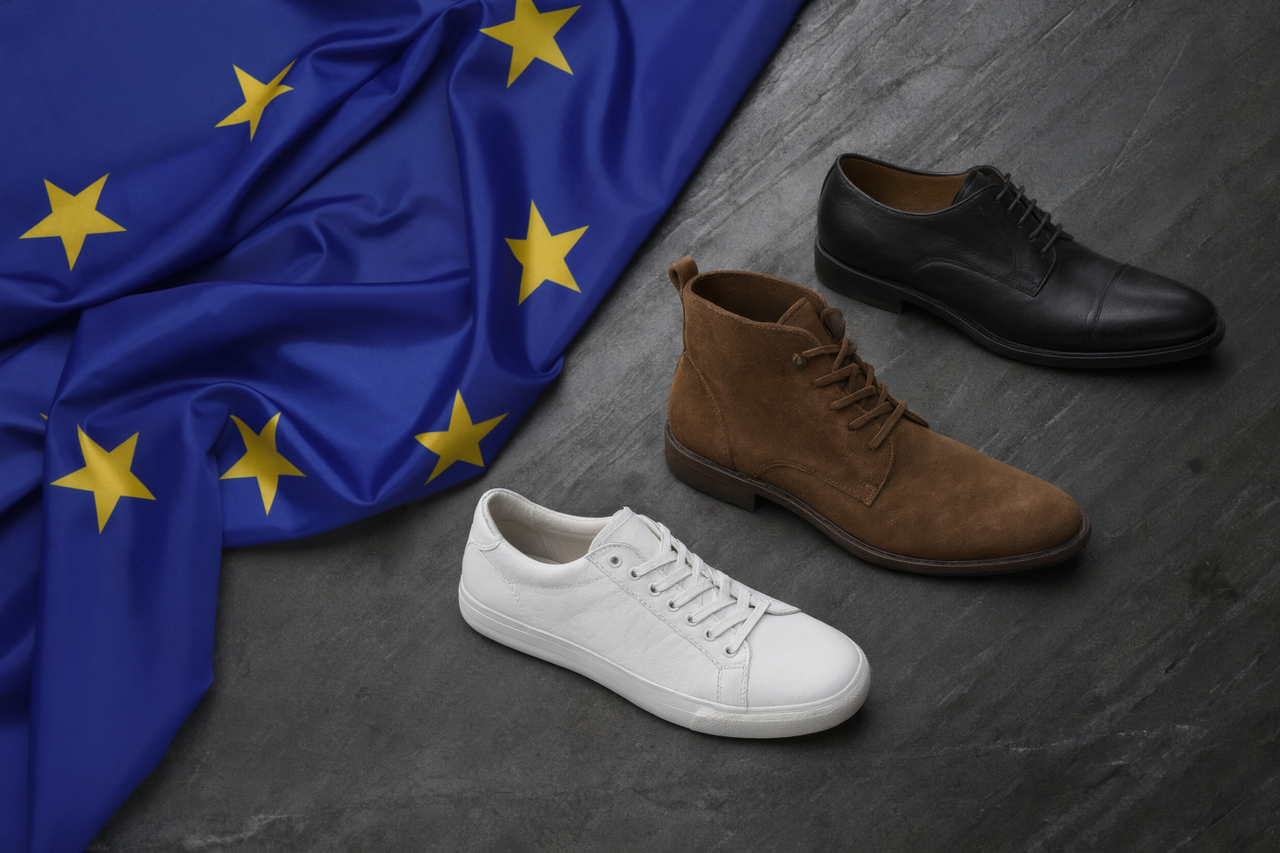
Mystery shoppers usually assess the sales assistant’s courtesy and the waiting time at the till. This time, they ordered shoes, received them at home and sent them to a laboratory. Between February and May 2026, the European Footwear Confederation (CEC) coordinated a mystery shopping exercise on footwear purchased from sellers operating on SHEIN, TEMU and AliExpress in seven countries: the Czech Republic, France, Germany, Italy, Portugal, Spain and the United Kingdom.
The results, released in Brussels on 12 October 2026, showed that out of 76 pairs analysed by accredited laboratories, 27 – or 36 per cent – failed to comply with at least one of the chemical requirements under the REACH restrictions. The tests looked for phthalates, formaldehyde, heavy metals, chromium VI, nickel release, polycyclic aromatic hydrocarbons (PAHs) and short-chain chlorinated paraffins (SCCPs). Phthalates were the most common cause of non-compliance.
And what about the shoes that are supposed to protect us? Here, the picture is even worse: 8 out of 10 models of safety footwear fail to meet EN ISO requirements. They fall short in terms of slip resistance and puncture resistance, impact and compression resistance, toe cap protection, and the bond between the upper and the sole. Several models claim protective performance without CE marking and without the required documentation of conformity.
The sample is limited, and the CEC makes this clear. But the data comes at a delicate time: the European Union has introduced new rules in the Customs Code; the Parliament and the Council are examining the €2 handling fee on e-commerce imports under €150; and a revision of the Market Surveillance Regulation is expected. The Confederation is calling on the European Commission and the Member States to ensure effective controls and clear accountability throughout the entire e-commerce supply chain, including platforms.