There is no ‘Made in Italy’ without technology. ASSOMAC and the supply chain that must be safeguarded
Flash news
June 2026
ASSOMAC General Meeting, Milan: the leather, footwear and leather goods technology sector ends 2025 down 11 per cent. The response is a permanent supply chain round table. And Africa is the opportunity to seize right now.
In the 1950s, an Italian industrial magazine was edited by a poet. It was called “Civiltà delle Macchine” (Civilisation of Machines), commissioned by Finmeccanica, and at its helm were Leonardo Sinisgalli – an engineer who wrote verse, or perhaps a poet who designed machines, depending on how you look at it – and Giuseppe Luraghi, a manager who had previously worked at Pirelli, Lanerossi and Alfa Romeo. Their idea was simple and, for the time, almost heretical: technology, industry, culture and beauty are not separate worlds. They are part of the same vision for the country.
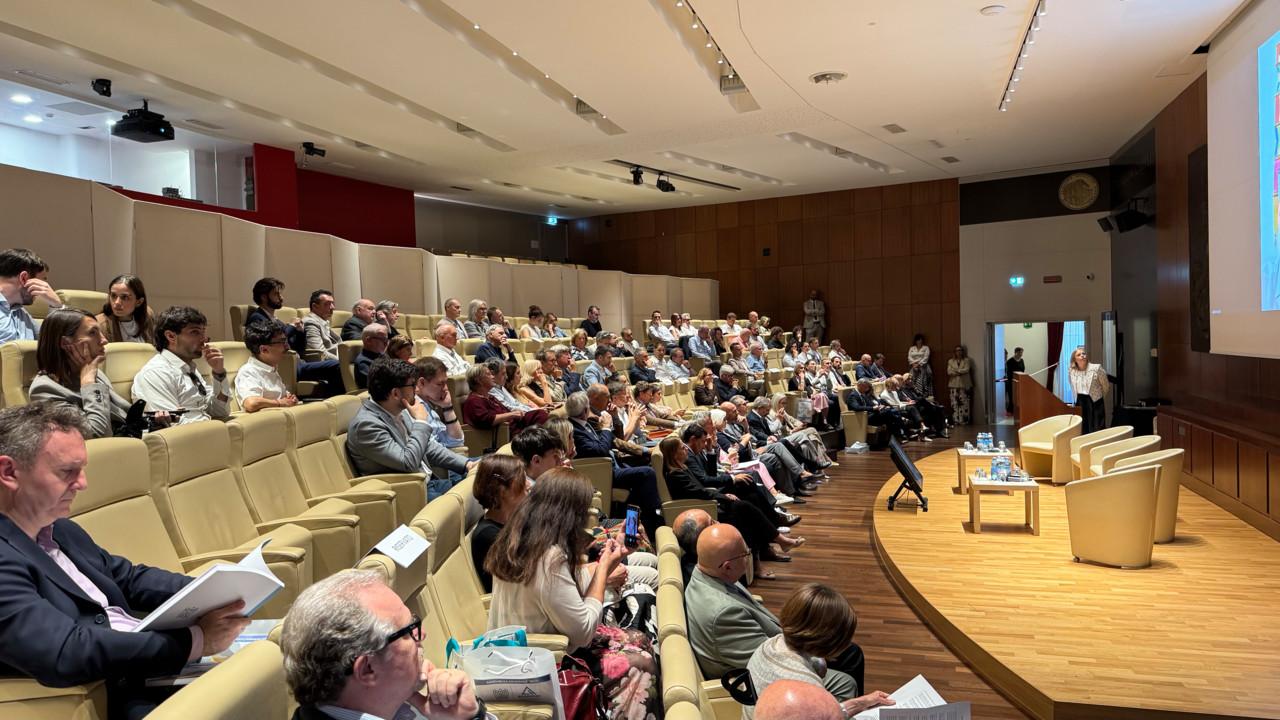
Seventy years later, in the hall of the Fondazione Cariplo Conference Centre, that same insight has returned to the fore. Except that now it is not being used to celebrate an economic miracle. It is being used to stem the bleeding.
On 18 June, the ASSOMAC General Assembly presented the figures for the footwear, leather goods and tanning technology sector. We examine these figures in greater detail in the following pages, but here we note that they are still on a downward trend.
THE SUPPLY CHAIN, BEFORE THE PRODUCT
Mauro Bergozza, president of ASSOMAC, chose not to begin his speech by discussing foreign markets or tariffs. He began with a principle, which he repeated as one repeats something one truly cares about: ‘There is no “Made in Italy” without the supply chain. There is no supply chain without manufacturing. There is no manufacturing without technology.’ The argument is that ‘Made in Italy’ does not come into being when the product is sold. It comes into being much earlier – in capital goods, components, chemicals and expertise – and holds up as long as all the links hold up. When one weakens, the entire chain falters.
Herein lies the most interesting reversal in the report. For years, the sector has told itself a convenient story: production can move elsewhere, as long as design, research and know-how remain in Italy. Reality has disproved this notion. Supply chains do not break painlessly: they shift. And when they shift, they do so in their entirety. First the end product migrates, then the suppliers, then the investments, and finally the very capacity to innovate. Technology is the last to leave, but it does leave.
The Vigevano district is the case study for this diagnosis. There, the ratio of machinery manufacturers to footwear manufacturers has now reached eight to one. A region built on the interdependence between those who make shoes and those who make the machines to produce them has now become so unbalanced that it is almost unrecognisable. Bergozza puts it bluntly: the problem is not China; China is the consequence. The problem is that we are hollowing out our supply chains all by ourselves.
Hence the concrete proposal, the one that gives practical meaning to the analysis: a permanent supply chain round table bringing together representatives from the fields of technology, materials and finished products – footwear, leather goods and tanning. Not yet another body, but a permanent forum for developing common strategies and presenting a united front to national and European institutions. Because – and this point applies beyond the sector as well – individual companies no longer compete on their own today. It is industrial ecosystems, supported by long-term public strategies, that compete.
Around this idea, the Assembly has set out concrete measures: ongoing monitoring of foreign markets, new industrial partnerships, generational continuity, trade fairs as a promotional tool, and digital and organisational transformation. It has become clear that none of these challenges can be tackled by a single company acting alone. And the message reached a distinguished audience: from Minister Urso’s adviser, Roberto Luongo, to the Ministry of Foreign Affairs with Alessandra Pastorelli, to the ICE Agency with Director-General Lorenzo Galanti, right through to the presidents of Assocalzaturifici, UNIC and Assopellettieri – Giovanna Ceolini, Alessandro Iliprandi and Claudia Sequi.
Within this discourse lies a call that raises the bar beyond the sector’s boundaries: a European and national industrial policy that is up to the task. Not a defensive policy, but one capable of fostering investment, scaling up, and the reshoring of high value-added production. And one that regards the technologies underpinning ‘Made in Italy’ as a strategic national asset, to be managed in a manner consistent with the country’s industrial interests. Within this framework, Federmacchine is called upon to act as a facilitator in dealings with Brussels.
AFRICA, NOW
If there is one section where the tone of the report shifts, it is the one on internationalisation. In particular, the issue of Africa. ‘The Mattei Plan is an important signal. But we need to step up the pace. Because Italy’s industrial presence must grow today, before other competitors further consolidate positions that will be harder to reach or overcome tomorrow.’
One observation, which emerged during the Assembly’s discussions, explains why this is the case. China’s advance in Africa is not about price: it is about presence, about building relationships before others do. This is precisely the ground on which the Mattei Plan is seeking to establish itself. The experience in Kenya, cited by Bergozza as an example of what happens when embassies, the Italian Trade Agency (ICE) and businesses pull in the same direction, is a small-scale model of what is needed on a larger scale.
Alongside this are the agreements Europe is forging with Mercosur, India, Indonesia and Mexico, and a trade fair presence that will see an Italian pavilion at the ANPIC fair in León, Mexico.
There is also a detail that adds food for thought to the many points already raised. Entrepreneurs report that companies in the sector hardly produce anything standardised anymore. The technical department is working at full capacity because every machine becomes a bespoke piece, designed around a client who, in turn, must innovate in order not to fall behind. This is both an asset and a cost: extremely high levels of expertise, technicians who take years to train, and the necessary funding.
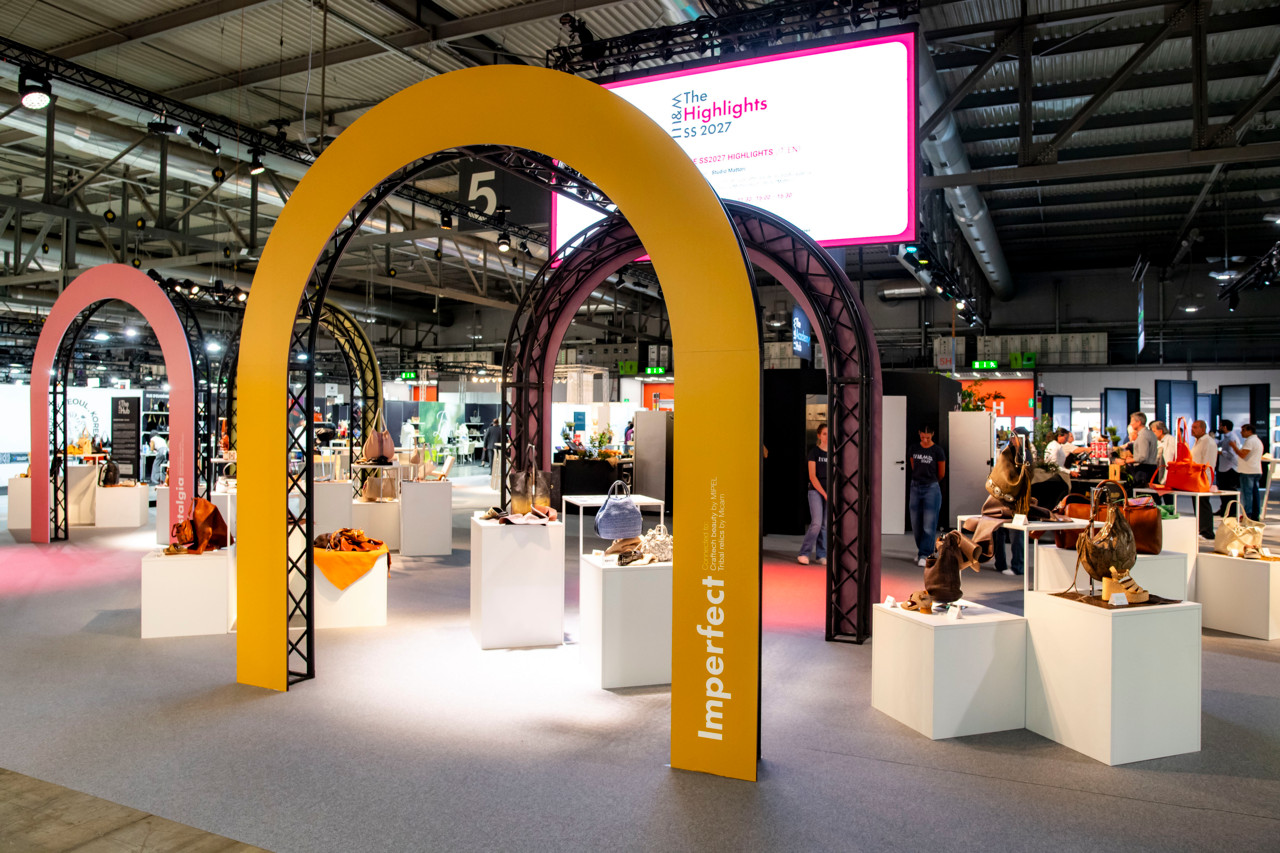
The trade fair itself has changed in nature. It is no longer a place where sales are made, but one where people meet: this is what the tanners say, having scaled back from the twelve events a year of the past to the two editions of Lineapelle considered truly indispensable.
And here the circle is complete with another voice from the Assembly, that of those representing footwear manufacturers: in Italy, the entire value chain exists, from tanning machinery to the finished product, and this is unique in the world. Taken piece by piece, every link in this supply chain is currently seeing a decline in figures. Taken as a whole, however, it retains something that resembles not resilience, but anti-fragility: the ability to emerge from a setback stronger than before. Provided we stick together.
Sinisgalli used to write verses amongst his technical drawings because he realised that the machine, on its own, tells us nothing. Seventy years on, the sector that manufactures machinery for the leather and footwear industries is asking the same of Italy: not to defend a product, but to recognise a way of life. Before that, too, moves on.
In the first half of 2026, turnover fell by 2.5 per cent and production by 4.6 per cent. Europe holds steady, whilst the Middle East slumps. 1,884 jobs were lost in six months – more than in the whole of 2025.
In the first half of 2026, the German footwear and leather goods industry remained stable, albeit at low levels. Amid price rises linked to the war with Iran and new European waste regulations, Italy saw a decline in volumes but maintained its value.
In 2025, global production remains at 24.6 billion pairs (+0.1 per cent), whilst the value of exports rises by 1.6 per cent to 172 billion dollars. Asia produces 88.7 per cent of shoes, whilst China’s share of exports falls to 61.2 per cent.