

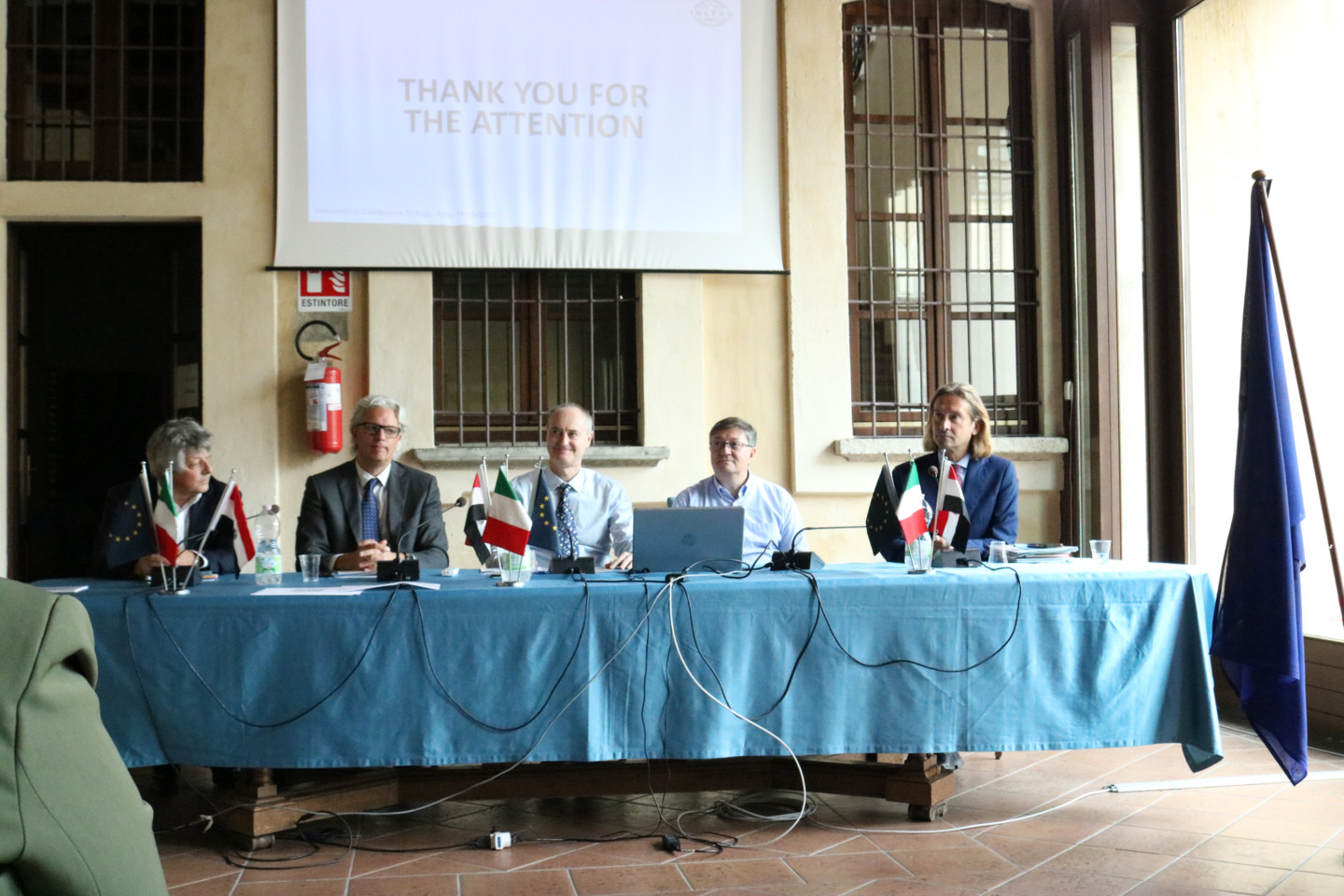
Robbiki Leather City: the Egyptian mission concludes in Turbigo
A Conference and the Signing of a “Memorandum of Understanding” to strengthen collaboration between Italy and Egypt in the leather industry
Keep reading...
October 2026

Following the ban on destroying unsold stock, the fashion industry is preparing for Extended Producer Responsibility. The deputy director of Confindustria Moda, Mauro Chezzi, explains the obligations, the environmental levy and bonuses, and the Retex.Green–Assocalzaturifici agreement.
Anyone who has bought a fridge or a dishwasher in recent years will have spotted a line on their invoice that often goes unnoticed: ‘environmental levy paid’. Before long, the same wording could appear on the receipt for a pair of lace-ups. The scheme is called Extended Producer Responsibility (EPR) and is set to be introduced in Italy for clothing, footwear, textiles and leather goods. We discussed this at MICAM Milan in September 2026 with Mauro Chezzi, deputy director of Confindustria Moda – Textile and Fashion Federation and association representative for Retex.Green, the consortium for the circular economy in the fashion sector, which announced its partnership with Assocalzaturifici at the fair itself.
Let’s start with the consortium. What is Retex.Green?
We founded it in March 2022 as Confindustria Moda, together with Assocalzaturifici and other associations within the Confindustria system, to promote circularity across the entire clothing and footwear supply chain. We did so in anticipation of the regulatory changes coming from Europe, which have already begun to come into force.
What changed in July 2026?
The first requirement of the European Ecodesign Regulation, approved two years ago, has come into force. It applies to large companies with over 250 employees and prohibits the destruction of unsold garments, except in a few cases provided for by the legislation. For over a year, we have been working on circularity measures to prevent destruction and to ensure that, where it is necessary and lawful, it takes place under the strictest possible criteria.
The next phase will be EPR. When will this come into effect?
Hypothetically speaking: if, by the end of 2026, the interministerial decree signed by the Ministry of Enterprise and Made in Italy and the Ministry of the Environment and Energy Security is published in the Official Gazette, companies will have four months to register with a consortium. Entities placing finished products on the Italian market, whether under their own brand or under licence, are obliged to comply. Small businesses will have an extra year.
How will the eco-contribution be calculated?
Each consortium will ask its members for a declaration of the quantity placed on the national market, expressed in kilograms. Exports do not count, but imports do. Using these funds, the consortium will establish a collection and sorting chain, following this order of priority: reuse, recycling and, finally, waste-to-energy. Retex.Green will not send anything to landfill: this is a practice we believe should be phased out as soon as possible.
Who actually bears the cost?
For companies, it is a matter of outlay, not cost. The principle is ‘the polluter pays’: companies pay the eco-contribution upfront and include it on the invoice or receipt, as is already the case for household appliances. The cost falls on the end consumer, who physically generates the waste.
Not all shoes, however, are the same.
The legislation aims to reward the most circular products. The parameters currently being developed are durability, recyclability, reparability and recycled content, although the list is not yet exhaustive. Those who work on these aspects will receive bonuses, i.e. reductions in the eco-contribution. Reducing the contribution means reducing the resources the company must advance to the system.
Is the supply chain involved in any way?
The manufacturing sector has no direct obligations, but it must supply circular products to those who place them on the market, thereby securing economic benefits. This is a stated objective of the legislation: those who sell govern the supply chain and have the leverage – including commercial leverage – to require it to fall into line. The linear model – in which products are manufactured, resources are consumed and waste is disposed of – has its days numbered.
What should a footwear manufacturer do now?
Realise that it is no longer a question of ‘if’, but of ‘when’ the regulation will come into force, because there is a European directive underpinning it: at most, it will be delayed by a few months. Aligning with the regulation now is not a gamble; it is a guarantee of competitiveness. It is advisable to identify the right consortium quickly. Retex.Green has the advantage of not having started out as an EPR expert, but rather as a specialist in footwear, clothing, textiles and leather goods. We believe it is important to have a partner who understands the sector’s challenges. Our aim is to drive research and innovation in recycling.
At MICAM, you also announced an incentive.
We have signed an agreement with Assocalzaturifici and the trade fair organisers: MICAM exhibitors who join Retex.Green by 31 December 2026 will not have to pay the membership fee for 2026 and 2027.
A Conference and the Signing of a “Memorandum of Understanding” to strengthen collaboration between Italy and Egypt in the leather industry
Keep reading...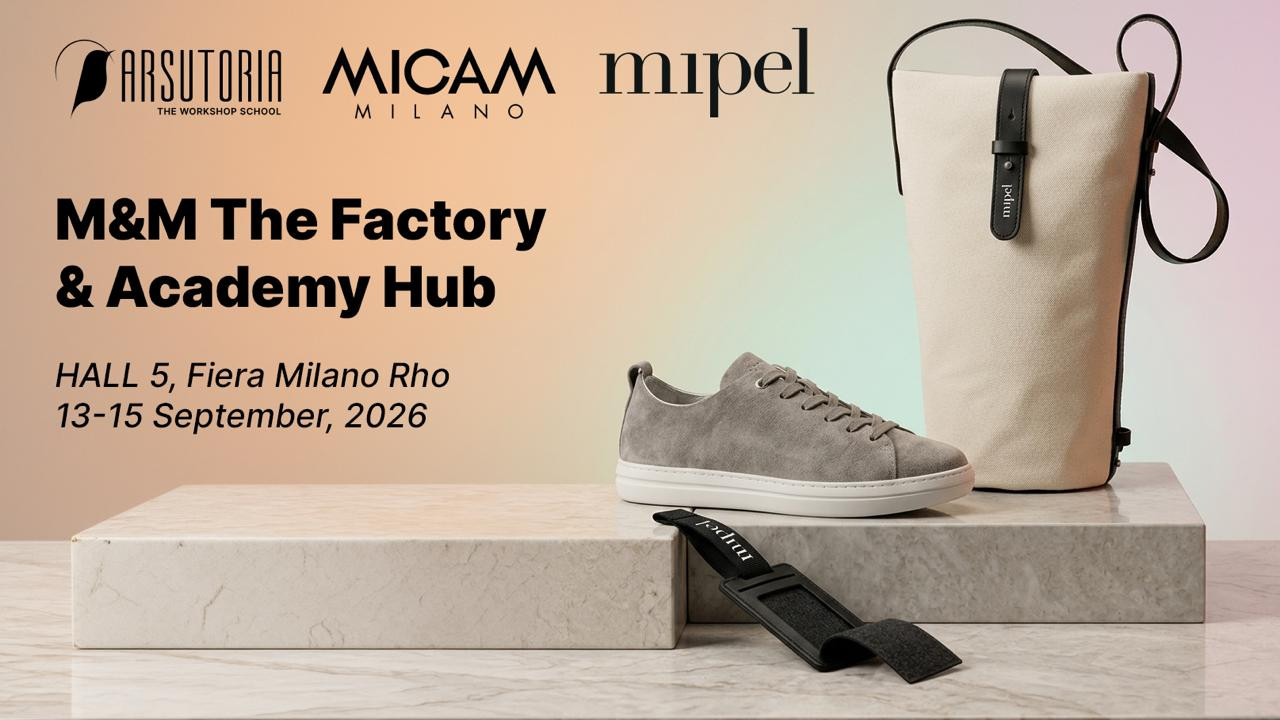
From 13 to 15 September 2026, in Hall 5 at Fiera Milano Rho, the M&M – The Factory & Academy Hub builds a luggage tag, a sneaker and a bag live. Almost 30 material and technology companies involved, and an educational programme developed by Arsutoria.
Keep reading...
At the helm of Riva del Garda Fierecongressi since 2007, he propelled the fairs beyond national borders. A tribute to a leader who foresaw the future by looking back.
Keep reading...You must login to read this free content
This content requires a subscription to view. Are you already a subscriber? Sign in