COTANCE and CEC urge further action for transparency
Following the complaint of the European Leather (COTANCE) and the European Footwear (CEC) Industries, the European Chemical Agency (ECHA) formally apologised for wrongly conveying, through their communications channels, the impression that leather goods or footwear have possible cancer-causing properties because of Cr VI. This ECHA’s deceptive communication was pinpointed last 15th of March in a joint letter from COTANCE and CEC. They denounced an infographic on the ECHA web page of its “Preventing Cancer” campaign and the corresponding LinkedIn Post for being inaccurate and misleading, reminding the Agency: “that Chromium VI is not used for tanning leather and that Chromium tanning is not the only tanning method in the sector. Yet, the infographic gives the impression that leather automatically contains Chromium VI, and that this presence is likely to cause cancer. This creates unjustified concerns in consumers, which may take distance from leather articles”. The letter further clarified that the actual EU restriction on Chromium VI in leather regards its potential skin sensitising properties, not its carcinogenicity. The formal response from ECHA came on April 9, which stated: “We [ECHA] apologise for this error and have corrected the infographic, as soon as our attention was drawn to it, to reflect the actual situation. We have also removed the LinkedIn post referred to in your letter”.
While COTANCE and CEC appreciate ECHA’s swift action to erase inaccurate and misleading information conveyed by its channels to the public, the leather and footwear industries express their profound disappointment over the Agency’s failure to fully accept responsibility for the harm inflicted upon these sectors. The decision to delete a post, which by then had already gone viral, does little to mend the reputation of our unjustly maligned industries, nor does it aid EU citizens in understanding what was wrong. “It is a good thing that ECHA rectified, but we regret that they did not fully capture our concern; they have managed the issue like a simple “editorial mistake”. We believe the harm done to the reputation and appeal of the leather value chain would need something more.” says Carmen Arias, Secretary General of CEC. In this sense,
COTANCE and CEC understand that further ECHA action should be forthcoming, such as running a formal corrigendum for repairing the unintended consequences of its actions. “This would evidence much more ECHA’s claimed commitment to accuracy, transparency, and accountability” adds Gustavo González-Quijano, Secretary General of COTANCE.
The global high-end market is holding at €1.5 trillion, but production volumes are declining, unit values are rising, and the pursuit of durability is gaining ground. The cross-analysis between the 25° Altagamma Observatory and the surveys of Assocalzaturifici and Assopellettieri outlines the route for Italian manufacturing towards 2027.
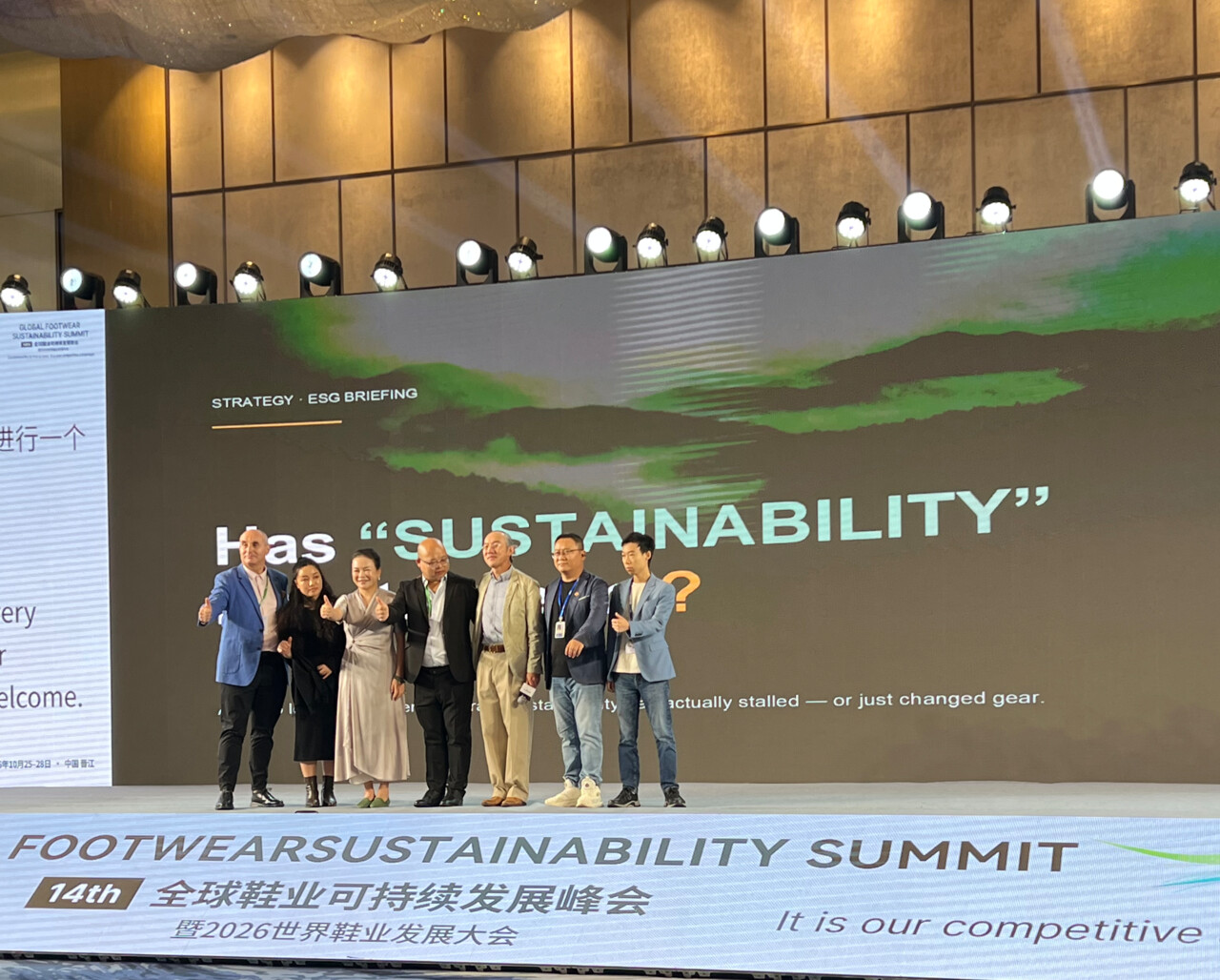
In Jinjiang, during the 14th Global Footwear Sustainability Summit, Changli Group unveiled its 200,000-square-metre logistics complex, due to become operational in 2027, and signed an agreement with SF International to measure the emissions of every footwear consignment.
At the 14th Global Footwear Sustainability Summit, it became clear that sustainability is measured in terms of costs, industrial scale, data and the ability to collaborate. Materials, digital technology and the dialogue between Europe and Asia were among the key themes.