

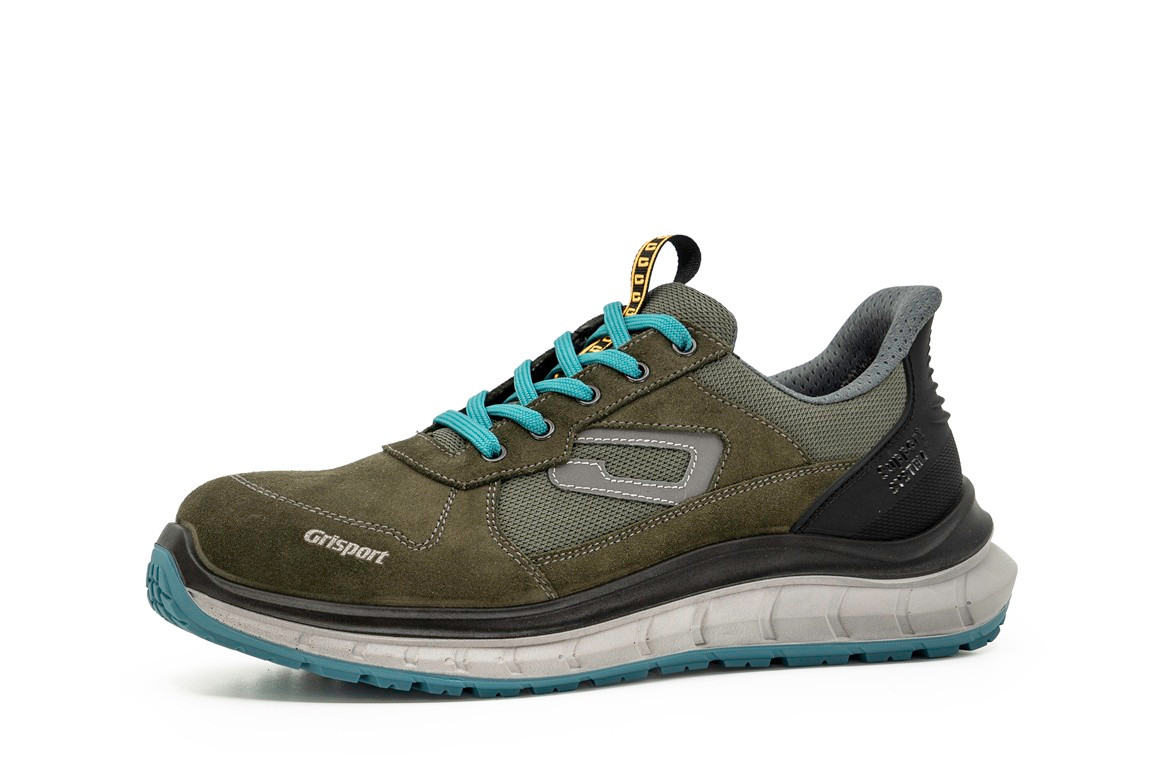
GRISPORT presents the LTX line: for those who never stop
The Veneto-based company is launching a new collection born from the idea that protection and lightness need not be a trade-off
Keep reading...
Originating in high-end running and tested by professional athletes, supercritical technology is now featured in the GLOVE HYPERFORM safety footwear—the advanced version of GLOVE, the Italian brand’s iconic model. We discuss this with Michele Risatti, R&D & Quality Director at Diadora Utility
October 2026
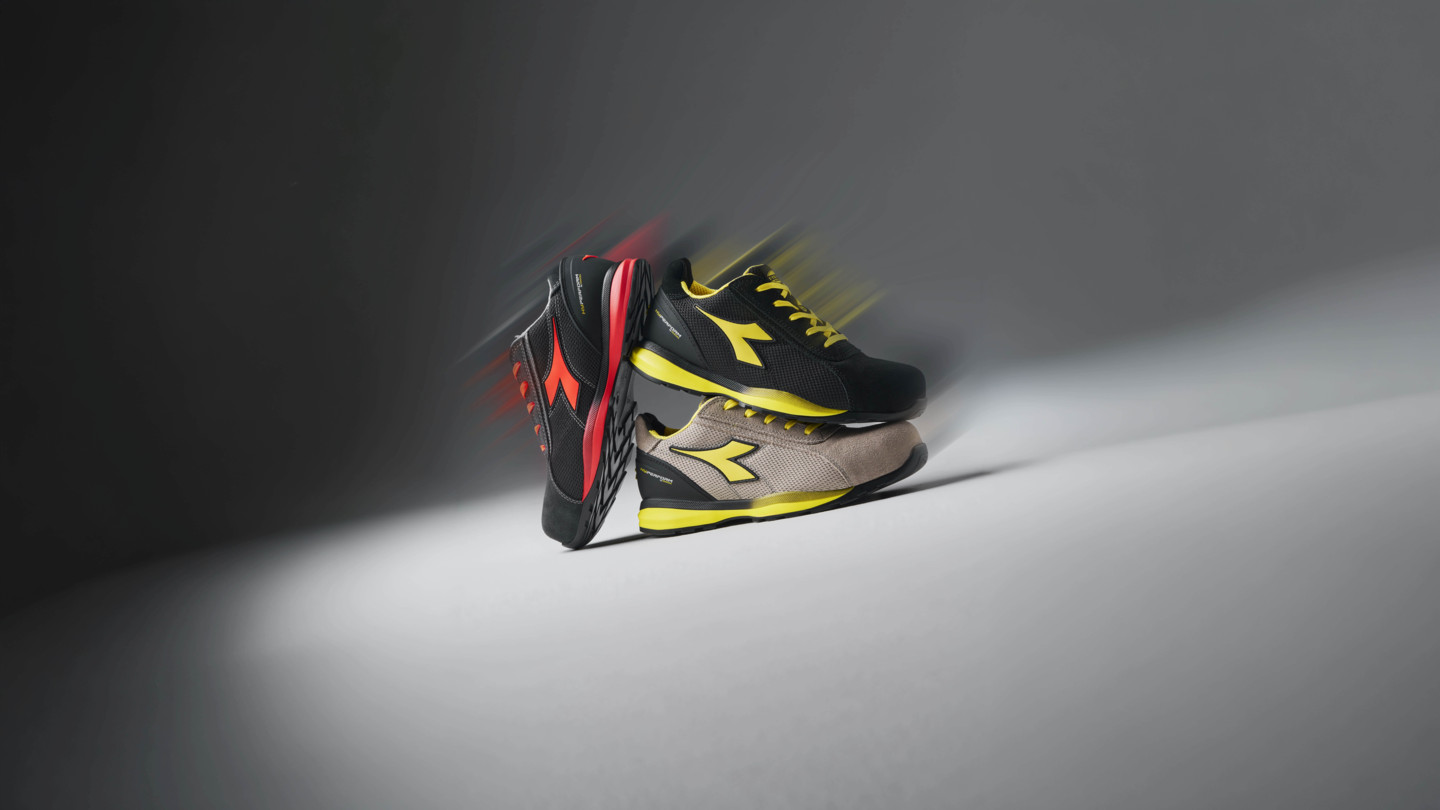
The safety footwear sector is undergoing a period of profound evolution, in which safety, comfort, and performance are no longer separate requirements but are becoming increasingly closely integrated elements. In this context, the introduction of supercritical technology in midsoles marks a significant leap forward: an innovation born and developed in the world of sports that now finds a new application in footwear designed for professionals.
Among the first brands to bring this technology to the safety sector is Diadora Utility, drawing on the experience its parent company has gained in the world of running. This technology transfer was no accident: the needs of an athlete and those of a worker actually share several commonalities, especially when it comes to lightness, cushioning, responsiveness, and fatigue reduction.
“We’ve brought our best technology—developed for high-end running and tested by professional athletes—to the safety footwear sector,” explains the company based in Caerano di San Marco, in the province of Treviso. This journey has made it possible to bring into the workplace skills, materials, and solutions that were initially designed to enhance athletic performance.
Supercritical technology allows us to modify the structure of the midsole, resulting in a material characterized by a unique combination of lightness, elasticity, and responsiveness. The result is a shoe that, while retaining all the elements necessary to ensure the protection required by regulations, aims to offer a feel that is increasingly similar to that of a sports shoe.
GLOVE HYPERFORM was officially unveiled at the A+A trade show and has been available to all customers and users since January 2026.
We discuss this in depth with Michele Risatti, Diadora’s R&D & Quality Director, who has been with the company since 2005 and is therefore very familiar with the various technological advancements that have taken place over the past two decades.
HYPERFORM originated in the world of running. What convinced you that this technology could also make a difference in safety footwear?
The answer is quite simple: at Diadora, we’ve always had a clear understanding of the end user’s needs, whether they’re an athlete or a worker. In running, we’ve been receiving a very specific request for years: shoes that are increasingly lightweight, capable of providing protection, cushioning, and responsiveness to reduce fatigue during athletic activity. We find the same needs today in the world of safety footwear.
People who wear safety shoes are often accustomed to wearing sneakers or running shoes outside of work and therefore seek comfort, lightness, flexibility, and responsiveness in the workplace as well. While a runner’s goal is to improve performance by reducing effort, for a worker it means getting through the day with less muscle and joint fatigue, while maintaining high performance throughout the day. From this perspective, there is a strong correlation between the needs of runners and those of professionals who wear safety footwear.
Did integrating supercritical technology pose any challenges in meeting the required certifications for safety footwear?
Rather than challenges, it required significant refinement. Diadora Utility now has extensive experience in designing safety footwear capable of easily passing all the tests required by regulations. The goal was to find the right balance between performance and protection, integrating the new technology without compromising safety standards.
The advantage is that the supercritical technology is applied to the midsole—that is, the part between the upper and the outsole—a well-defined area of the shoe. The elements that have the greatest impact on impact, compression, and puncture tests—such as the toe cap and puncture-resistant plate—retain their structural function, while the midsole can be optimized to offer greater comfort and performance.
How much did the experience gained with EVA influence the development of this new solution?
A great deal. As early as 2005, we were among the first to introduce EVA into the world of work footwear. That experience allowed us to gain an in-depth understanding of the midsole’s behavior and to figure out how to optimize it—especially in the heel area—and then extend that development to the forefoot.
With the supercritical technology, we’re taking another step forward, while also maintaining the characteristics of the HRO rubber outsole, which guarantees resistance to abrasion and slipping.
Why did you choose to introduce HYPERFORM specifically on the Glove model?
Glove is an icon for Diadora Utility, both within the company and in the safety market. In 2005, it marked a turning point in the safety footwear sector, and even today, it remains one of the most recognizable and enduring models in our collection. It is the product that, more than any other, has continuously evolved over the years without losing its identity. We chose to start with the Glove because we knew its structure, material distribution, and performance in the field inside and out. This allowed us to integrate innovative technology into an already established platform, further enhancing its comfort and performance. In the future, the goal is to extend supercritical technology to other models in the lineup, but it was only natural to start with our flagship model.
Where did supercritical technology originate, and how did it make its way into the world of safety footwear?
We had a significant advantage: Diadora Utility is part of the Diadora family, a company that has always invested in sports and innovation. This allowed us to work on a technology—specifically, supercritical foaming (SCF)—that we had already developed extensively in running shoes following the COVID-19 pandemic. After studying various compounds and their properties, we began incorporating this technology into Diadora running shoes in 2024, starting with models such as the Gara Carbon, Frequenza, and Corsa. The experience we’ve gained in the world of sports has given us the expertise needed to apply it to the field of safety with GLOVE HYPERFORM.
What, in simple terms, is supercritical expansion?
To understand the difference, we need to start with the traditional method. For nearly fifty years, midsole materials have been produced from EVA through a chemical expansion process: the material was placed in a mold along with additives and blowing agents which, through heat and pressure, triggered a chemical reaction capable of creating the characteristic microcells within the material. That system works very well, but it has a specific limitation: beyond a certain reduction in density, the material loses strength and durability because the bubbles become too large and the structure tends to collapse.
Supercritical expansion takes a completely different approach: the expansion is no longer chemical, but physical.
How does the process actually work?
It starts with a small, rigid midsole made of thermoplastic material. This is placed in an autoclave, where it is subjected to pressures and temperatures that soften the material without melting it. Nitrogen is introduced into the autoclave under so-called “supercritical” conditions. In this state, the nitrogen penetrates the material extremely uniformly. When the pressure is released, the nitrogen microbubbles expand, carrying the material with them. The result is a homogeneous structure, with cells that are all very similar to one another, achieved without any chemical reaction.
What is the advantage over traditional technology?
The main advantage is that we can drastically reduce density without compromising the material’s durability. In running shoes today, we’re even working with densities below 0.10 g/cm³. For safety shoes, we’ve identified an optimal balance at around 0.14 g/cm³—a density that ensures both lightness and long-term durability.
To put this in perspective:
Traditional EVA: approximately 0.20–0.30 g/cm³;
Expanded polyurethane: between 0.35 and 0.45 g/cm³;
Diadora Utility Supercritical: approximately 0.14 g/cm³.
This means achieving nearly half the density of traditional EVA and about one-third that of polyurethane.
How did you determine the right density for the safety sector?
We didn’t limit ourselves to lab tests. We conducted numerous field tests, involving colleagues from logistics and general services who used the prototypes under real-world working conditions. The value of 0.14 g/cm³ is the result of this balance: light enough to offer a significant improvement over traditional materials, yet durable enough to ensure the cushioning, responsiveness, and durability required of a safety shoe.
Between lightness, cushioning, and responsiveness, which feature makes the biggest impression on those trying the GLOVE HYPERFORM for the first time?
Weight reduction is one of the most important aspects of next-generation safety footwear, especially since today they are worn for up to 10–12 hours a day—not just during work. A reduction of 50–100 grams can help reduce fatigue.
GLOVE HYPERFORM’s supercritical material also offers a significant advantage in terms of cushioning and energy return: it absorbs more impact at the heel, reducing stress on the musculoskeletal system, and returns more energy during the push-off phase.
Another benefit is the facilitation of the roll, that is, the transition from heel to forefoot. A lighter, more flexible, and more responsive shoe makes the stride more natural and fluid, helping to further reduce muscle load. The goal is to scientifically measure these benefits through specific tests on so-called “walking economy,” a field still under study.
Has the introduction of supercritical technology also revolutionized the production process?
Only partially. The final molding stage remains essentially the same: the preform is still placed in the final mold, where the shape, contours, and characteristics of the midsole are defined.
The real innovation lies in the initial phase—that is, the creation of the preform and its passage through the autoclave. For this process, we collaborate with specialized partners who have highly advanced facilities, which are now increasingly common in the running industry.
These are modern machines, often powered by photovoltaic systems, which represent a significant advancement in terms of production efficiency as well.
What developments do you expect from supercritical technology in the coming years?
Supercritical technology is relatively new in the footwear industry: although the process of supercritical expansion of polymers has long existed in sectors such as aerospace and rail transport, its use in footwear has only become established in recent years. Today, our goal is to maximize its potential by focusing on material development, density optimization, and integration with other proprietary technologies. The direction is clear: to develop shoes that are increasingly lighter, more flexible, and more comfortable, while maintaining high performance. It is a constantly evolving journey that paves the way for increasingly innovative solutions for the future of footwear.
The production process does not use chemical blowing agents, making this technology truly sustainable. How important is it today to develop materials that simultaneously improve performance and reduce environmental impact?
GLOVE HYPERFORM is made with supercritical material that, on the one hand, reduces the use of chemicals in the expansion phase—such as accelerators and additives—and, on the other hand, allows for a reduction in the amount of material used for the midsole while maintaining the same volume. This means lower consumption of virgin raw materials and, consequently, a reduced impact in terms of the resources used to produce them. This is another step in a process already underway, which includes the use of recycled components and the search for increasingly sustainable solutions. The real challenge for the future, however, will be closing the shoe’s life cycle: without an effective end-of-life collection and recovery system, even products designed to be recyclable cannot reach their full potential. There is still a long way to go.
The Veneto-based company is launching a new collection born from the idea that protection and lightness need not be a trade-off
Keep reading...

From November 3 to 5, the French capital will become the meeting place for professionals in the fields of prevention and safety
Keep reading...You must login to read this free content
This content requires a subscription to view. Are you already a subscriber? Sign in