Almost one in five Italian leather bags failed to cross the German border this year. In the first half of 2026, Germany imported 372,000, compared with 456,000 the previous year (-18.5 per cent). Yet the value fell by just 3.7 per cent, to 112.2 million euros. Fewer items, higher average price. Good news? It depends on which side of the counter you’re looking from.
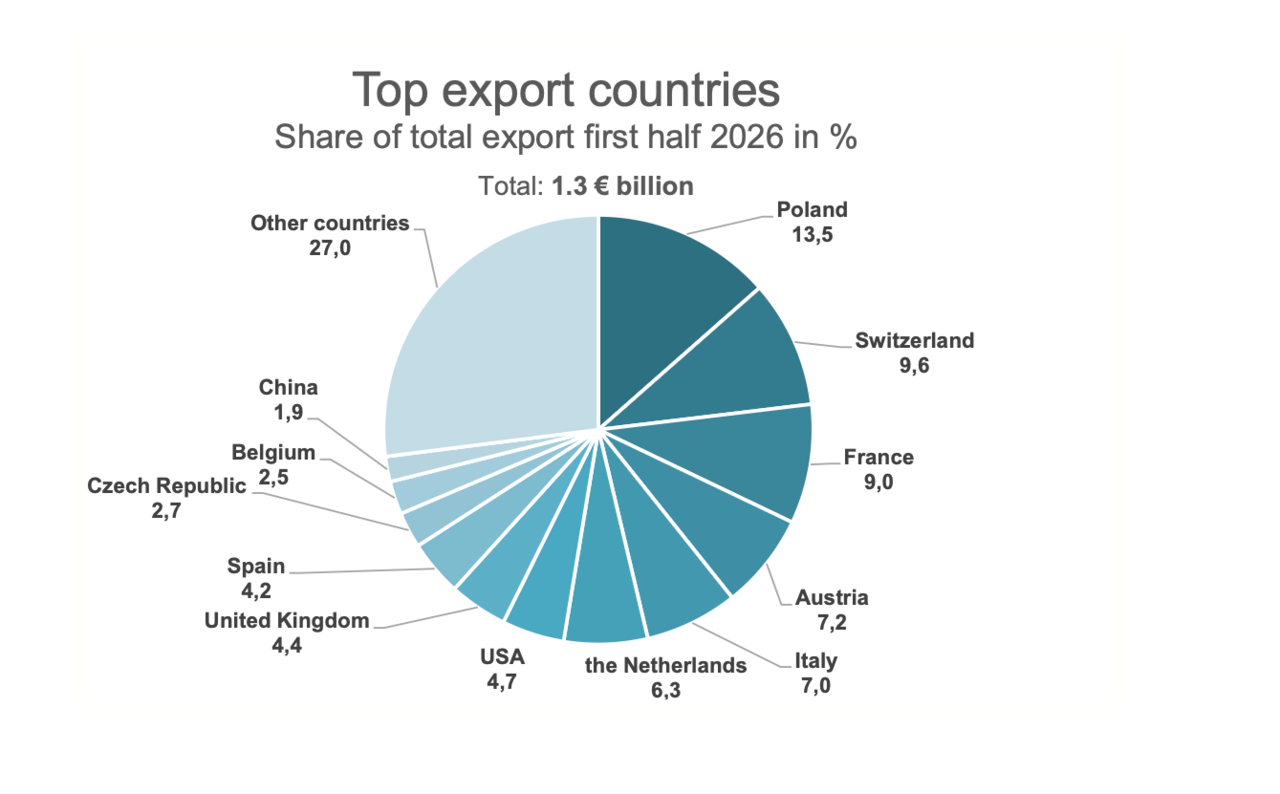
The picture is painted by the Federal Association of the German Footwear and Leather Goods Industry (HDS/L). Following the sharp decline between 2024 and 2025, turnover for German footwear manufacturers fell a further 2.4 per cent, from 1.17 to 1.14 billion euros. The domestic market fell by 2.8 per cent (903 million), whilst exports held steady at 242 million. The leather goods sector fell by 1.1 per cent. Stability, yes, but only at ground level. The number of employees at footwear companies with at least 50 staff fell to 8,943 (-3 per cent). In the leather processing sector, the decline was 11.1 per cent.
And what about Italy? German footwear exports to Italy fell by 23.6 per cent (11.9 million pairs). Imports from Italy fell by 17.5 per cent (10.2 million), dragged down by city shoes with leather uppers (-16.8 per cent). In leather goods, however, Italy remains Germany’s second-largest supplier and grew by 1.7 per cent, to 271.9 million euros. Only China ranks ahead, though its share of the total import value slipped from 44.2 per cent to 42 per cent. Meanwhile, German footwear exports to the United States rose by 22.6 per cent (re-exports?).
There is no shortage of clouds on the horizon. The war with Iran is driving up transport, energy and raw material costs, whilst price rises from Asian factories are being passed up the value chain. Then there is the bureaucracy. The forthcoming German textiles law, which transposes the EU Waste Framework Directive, will extend producer responsibility to footwear, imposing obligations regarding the collection and management of used products. The association supports the goal of circularity but calls for harmonised rules free from bureaucratic red tape. Also on the table is the EU–Indonesia Comprehensive Economic Partnership Agreement (CEPA), which must be ratified in time for it to come into force in 2027.
‘German footwear and leather goods enjoy an excellent reputation abroad: we must promote this and strengthen our international contacts,’ says Torben Schütz, Director General of HDS/L. Demand, therefore, has not disappeared. Price-conscious consumers continue to favour products that combine functionality, quality, design and durability.