
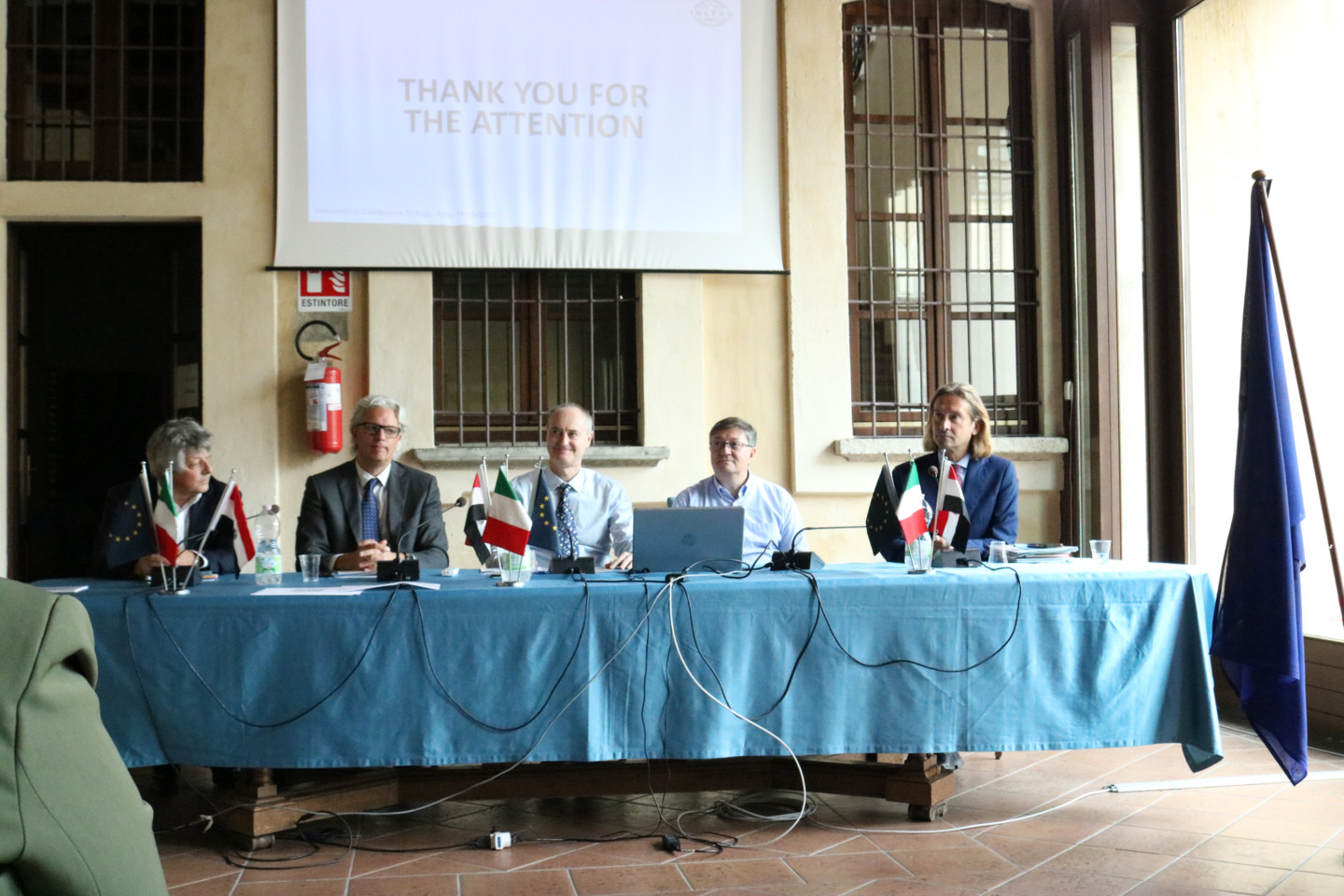
Robbiki Leather City: the Egyptian mission concludes in Turbigo
A Conference and the Signing of a “Memorandum of Understanding” to strengthen collaboration between Italy and Egypt in the leather industry
Keep reading...
August 2026

A year of collaborative work has resulted in version 1.0 of the Guidelines, which support more responsible, transparent and integrated supply chains.
In the presence of over 100 professionals from the fashion industry, ‘4s ETHIC’ – version 1.0 of the Guidelines designed to support more responsible, transparent and integrated supply chains – was officially launched on 14 May at the Confindustria Moda headquarters in Milan. The new fashion supply chain monitoring system, developed by Ympact in collaboration with industry stakeholders, is the result of an intensive process lasting over a year, coordinated by Ympact through a Harmonisation Committee involving brands, manufacturers, verification bodies and trade associations, with the aim of establishing a common approach to managing environmental, social, health and safety, and corporate integrity risks throughout the supply chain. At the heart of the programme is the creation of a harmonised checklist and a shared supply chain monitoring system, called 4s ETHIC, powered by the Ympact digital platform.
The aim is to overcome the fragmentation of audits and documentation requests that currently place a burden on manufacturing companies, by introducing a common language and an interoperable system for verifying environmental and social compliance within the fashion supply chain. Whilst the institutional framework sets out the principles of conduct, 4s ETHIC’s Guideline 1.0 provides a ready-to-use technical and digital solution for implementing and verifying compliance and transparency requirements in a collaborative and digital manner.
GUIDELINE 1.0
The 4s ETHIC Guideline 1.0 is an operational tool designed to assist companies within the supply chain in implementing harmonised requirements and preparing for the verification activities that will commence in June 2026.
The Guidelines define:
• the architecture of the monitoring system;
• the audit procedures;
• the criteria for the qualification of verification bodies;
• a shared framework of requirements organised into five key areas: Management System; Environment; Health and Safety; Social; Corporate Integrity and Reputation.
The 4s ETHIC system provides for on-site audits conducted by third-party bodies qualified according to shared criteria of independence, competence and impartiality, using methodologies based on the triangulation of documentary evidence, direct observations and confidential interviews with workers.
The first qualified body within the system is Bureau Veritas Italia, which contributed to the pilot phase of the model’s technical implementation, carried out with the involvement of four companies in the supply chain and a number of brands to review the system for sharing results.
“Identifying the risks and impacts of responsible fashion supply chains is now a strategic priority for the fashion sector,” said Francesca Rulli, founder of the 4sustainability® framework and co-founder of Ympact. “We need to move away from fragmented monitoring models towards shared systems capable of generating reliable data, transparency and value throughout the value chain. With 4s ETHIC, we wanted to contribute to building a shared infrastructure that supports businesses in strengthening their compliance frameworks and, at the same time, enables a concrete path of continuous improvement, to the benefit of the competitiveness and credibility of ‘Made in Italy’ on the international stage. “I would like to thank Confindustria Moda for its collaboration and all the participants in the working group, who, through their experience, professionalism and willingness to share, have demonstrated a commitment to working together for the future of responsible fashion.”
The Ympact platform will serve as the system’s digital infrastructure, enabling the centralised collection of evidence, the controlled sharing of information amongst authorised stakeholders, and the structured management of audit and follow-up processes.
The initiative marks an important step towards building increasingly responsible and transparent fashion supply chains, strengthening the competitiveness of ‘Made in Italy’ in an international context characterised by growing regulatory and market expectations regarding risk assessment, sustainability and digital transformation.
A Conference and the Signing of a “Memorandum of Understanding” to strengthen collaboration between Italy and Egypt in the leather industry
Keep reading...
From 13 to 15 September 2026, in Hall 5 at Fiera Milano Rho, the M&M – The Factory & Academy Hub builds a luggage tag, a sneaker and a bag live. Almost 30 material and technology companies involved, and an educational programme developed by Arsutoria.
Keep reading...
At the helm of Riva del Garda Fierecongressi since 2007, he propelled the fairs beyond national borders. A tribute to a leader who foresaw the future by looking back.
Keep reading...You must login to read this free content
This content requires a subscription to view. Are you already a subscriber? Sign in