Slow Fiber expands: new members for sustainable Italian textiles
The Italian network of companies in the sustainable textile and furnishings sector announces the addition of eleven new manufacturers.
Company news Arsutoria
July 2026
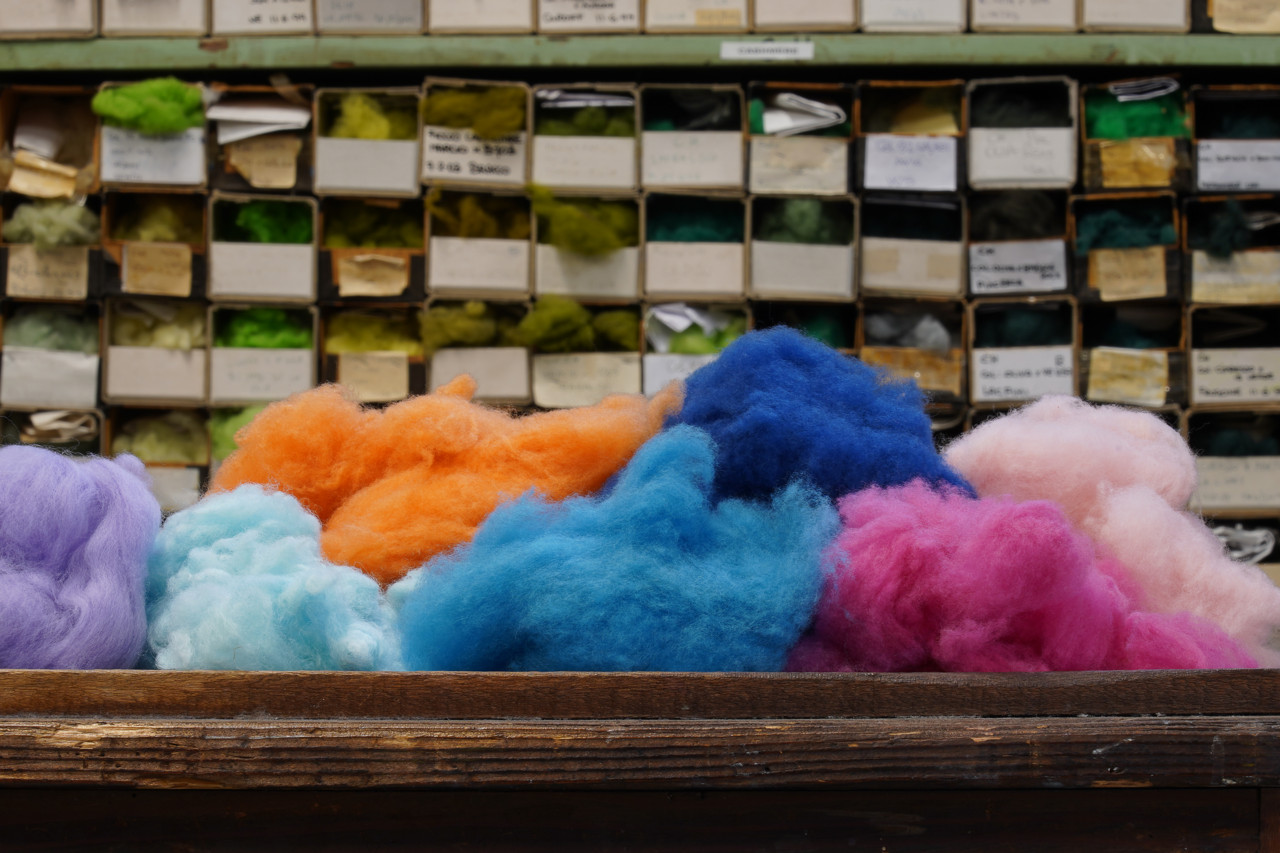
At a time of profound regulatory change for the sector, the Slow Fiber association has reached a total of 38 members with the addition of eleven new manufacturers. These are: Cardinalini & C. SpA, a long-established Umbrian company in the textile and clothing sector; Brugnoli, a Busto Arsizio-based company specialising in circular-knit fabrics for over 70 years. Tintoria Mancini, a Biella-based company in Sandigliano which has specialised for over 50 years in the dyeing of cashmere, wool, vicuña, alpaca and silk in staple fibre, tops and skeins. Maglieria Gina, a family-run business in Dairago (MI) which has been producing circular knitted fabrics for over 40 years. I.T.T. Industria Tessile Tintoria Spa, a company that has specialised in the dyeing of fine fibres and fabrics for over 50 years. Tintoria e Stamperia in Lambrugo (CO), which for over 80 years has been involved in dyeing and finishing, primarily of shuttle-woven fabrics made from artificial and synthetic fibres. Tessitura F.lli Bortolotto, in the province of Treviso, has been producing artisanal fabrics since 1963. Quality Biella has been offering integrated services for textile quality for over 50 years: mending, quality control and garment manufacturing, combining artisanal expertise with technology. Filatura Luisa 1966 has been producing high-end combed yarns in Masserano (BI) for 60 years, combining quality, innovation and sustainability. Roberto Collina Maglieria, a world-class family brand, has been producing high-quality knitwear in Crevalcore (BO) using state-of-the-art machinery since the early post-war period. Achille Pinto, a company based in the Como district, has been producing fabrics for clothing and finished garments for over 90 years.
The new members come from historic ‘Made in Italy’ districts and from regions where manufacturing expertise remains a living heritage, to be preserved and promoted: large industrial groups and small artisan workshops, companies from north-western and central Italy, businesses operating across different stages of production, from spinning to knitting, from dyeing to weaving: a diversity that reflects the richness and complexity of the Italian textile supply chain.
The values of Slow Fiber: not an ethical choice, but market demands
The new European regulations on sustainability – from the ban on the destruction of unsold stock to mandatory due diligence throughout the supply chain, right through to rules on transparency and traceability – set out a framework in which the founding principles of Slow Fiber are no longer merely an ethical choice, but a response to the new European regulations.
“Slow Fiber was founded with two interlinked missions: to foster a culture of understanding within the supply chain and to support small artisans, the custodians of skills that we risk losing. Our companies, which are predominantly family-run, rely heavily on craftsmanship and a deep understanding of the skills involved in every single stage of the supply chain. Only in this way is it possible to achieve quality. And without quality, there is no future for the Italian textile industry. Today, with 38 member companies, we see that this vision is gaining increasing traction within the sector. And we are only just getting started,” said Dario Casalini, founder and president of Slow Fiber.
Support for small companies
One of the cornerstones of Slow Fiber’s identity, right from its foundation, has been the protection of micro and small artisan businesses, including those with fewer than ten employees. These businesses are often unable to cope on their own with the costs and complexity of certification, traceability and regulatory compliance processes. Through the network, these businesses gain access to training, shared compliance services and support tools that they might not be able to afford on their own. “It’s not just about solidarity within the supply chain,” explains Marco Bardelle, vice-president of Slow Fiber, “it’s a question of the ecosystem. If small specialist artisans disappear, skills and craftsmanship that no large company can replicate in-house will be lost. Ultimately, larger companies that build their products precisely on that excellence will also lose out.”
Building on the success achieved in the textile sector, Slow Fiber is now turning its attention to another ‘Made in Italy’ sector that is in deep trouble: leather goods. The signs of crisis are alarming: it is estimated that around 190 companies – almost all of them SMEs – have closed in the Scandicci district of Tuscany alone, resulting in the loss of over 2,000 jobs and more than 7,000 workers being placed on short-time working or social safety net schemes (figures provided by Assopellettieri and Confindustria Moda). This downturn highlights the fragility of an entire production system in the face of pressure from the global market.
Cardinalini & C. SpaFilatura Pettinata Luisa 1966 Maglieria Gina srlQuality Biella GroupTintoria e Stamperia di Lambrugo S.p.a
The Jinjiang-based Chinese group, which has been an ODM for GEOX, Skechers and Jack Wolfskin for thirty years, is opening its first customs logistics park in Quanzhou. Two hundred thousand square metres, AI-powered sorting, eighteen European warehouses: the Chinese footwear industry is reinventing itself.
The brand, founded between Italy and Dubai, ventures beyond the world of trainers for the first time with ‘Linea’, the first loafer in a collection that redefines the concept of imperfection.
The ZDHC framework covers textiles, leather and plastics, but not metal: for years, the accessories supply chain has been responding to written requests intended for other processes. Led by the Physis Consortium, the first list of restricted substances for electroplating was drawn up at the end of 2025.