Goodbye to fabric tape: replaced by a lightweight, flexible system integrated into the garment. The result of a collaboration with Juki, YKK introduces a new way of sewing zips, reducing weight, friction and environmental impact.
Company news Arsutoria
November 2025
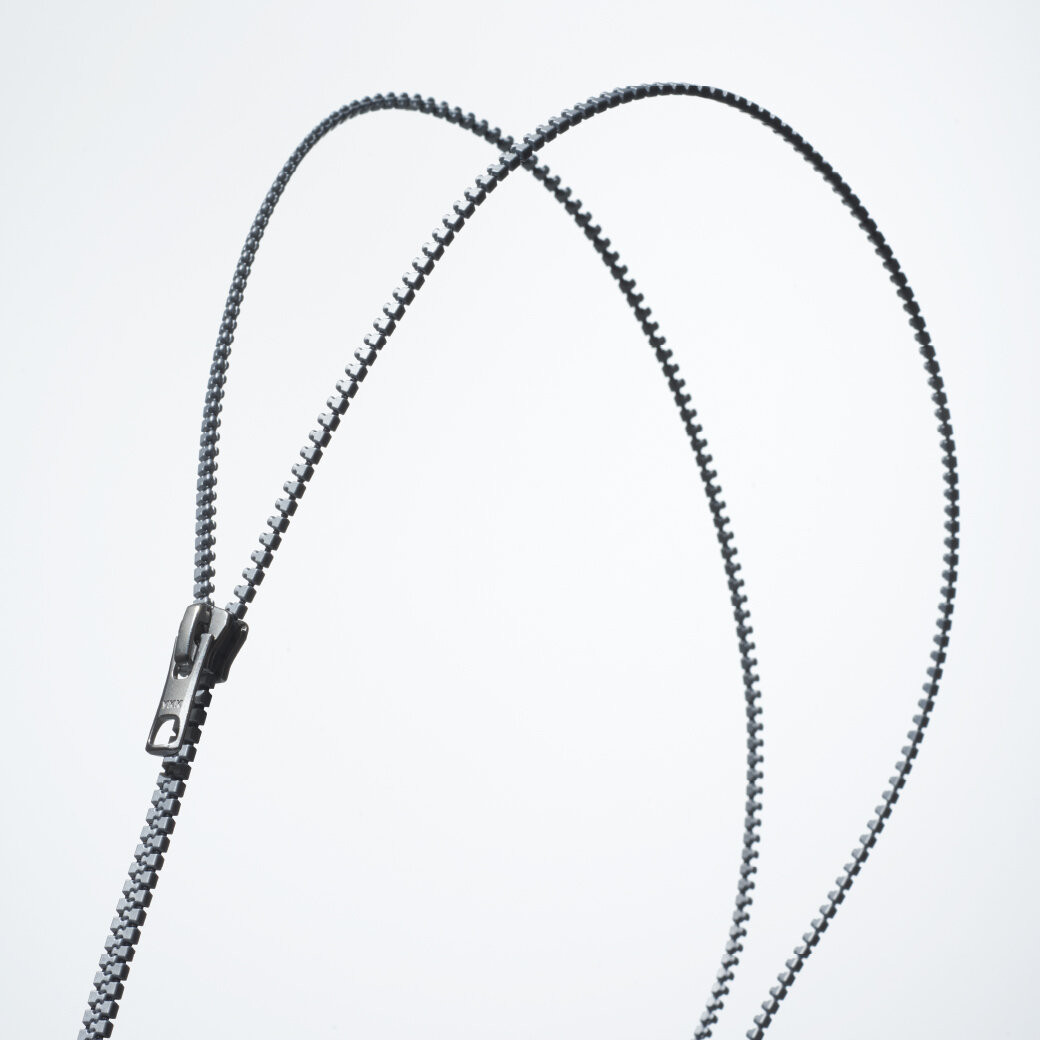
For over a century, the zip fastener has remained unchanged: two rows of teeth, a tab and a fabric tape. Then came YKK. With AiryString, the Japanese company that produces half of the world’s zips has eliminated the superfluous, removing the tape that seemed indispensable. The result is a tape-free zip that is lighter, thinner and softer, able to blend into the fabric instead of overlapping it.
The breakthrough is not aesthetic, but engineering. To compensate for the loss of structure caused by the tape, YKK redesigned the teeth, production process and machinery, developing a dedicated sewing machine with Juki Corp. This system allows the zip to be attached directly to the garment, simplifying production and improving the final result.
Compared to a Vislon® No.5 zip, AiryString is lighter, has less friction and offers smoother sliding. Tests conducted on seven different fabrics show greater softness and a more uniform tactile sensation. In technical or sports garments, such as those by Descente Japan or The North Face, the difference translates into dynamic comfort.
In terms of production, the reduction in materials and sewing steps means less consumption of fibres, dyes and water, with a lower environmental impact. An invisible zip, but tangible in its results: lighter, more flexible, more consistent with the evolution of contemporary materials.
And above all, consistent with the YKK motto: Small parts. Big difference.
Industrie Chimiche Forestali S.p.A. has ended the year with impressive results despite challenging circumstances, confirming its leadership in the high-tech adhesives and textiles sector.
The Trissino-based group presents a production process that drastically reduces water consumption and a new S/S 2027 collection that celebrates the authenticity of the material.