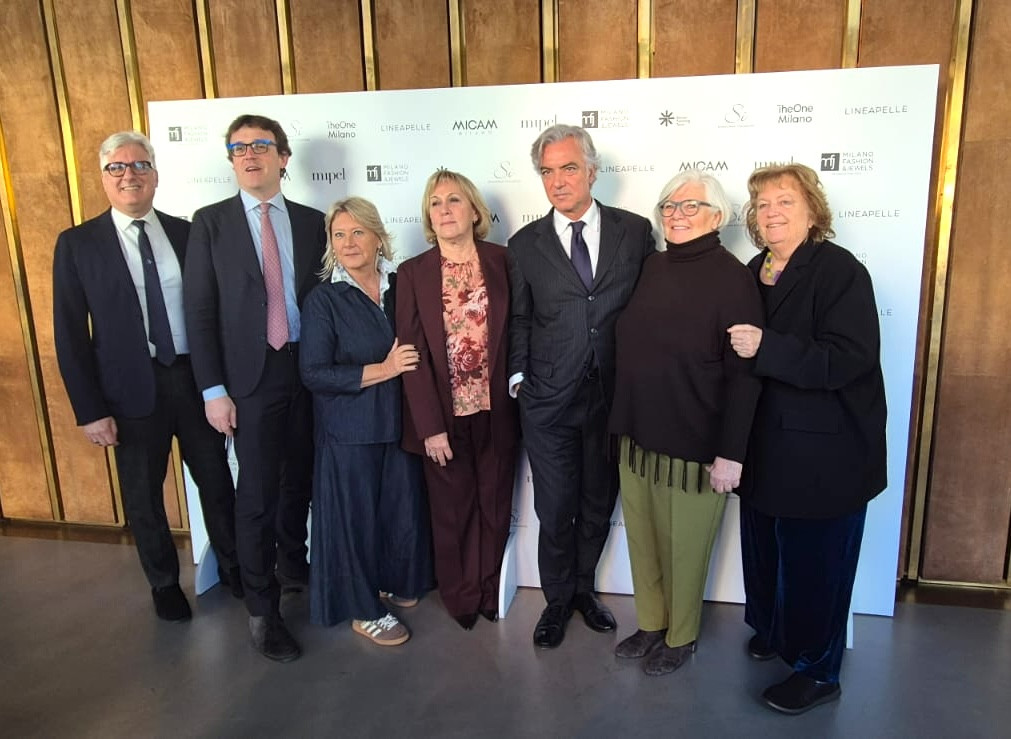
At Simac Tanning Tech 2025, a panel curated by YMPACT explored how technological innovation, data systems and new design approaches are redefining sustainability in the leather and footwear supply chains.
Fairs news
December 2025
Technological innovation, traceability and advanced data management are becoming the pillars of responsible transformation in the leather and footwear sector. During the September 2025 edition of Simac Tanning Tech, Francesca Rulli, Co-Founder of Ympact, brought together associations, brands and schools to discuss how these elements can accompany the construction of a more transparent, efficient and future-proof fashion system. Not only to respond to regulatory developments, but also to generate operational and competitive advantages.
Cristiano Paccagnella, Vice-President of Assomac, opened the debate by emphasising the central role of machinery in generating reliable data, which is essential for monitoring impacts and improving the efficiency of production processes. Francesca Rulli then outlined the main drivers behind the transformation of the sector: supply chain transparency, traceability systems geared towards future digital product passports, decarbonisation programmes and chemical management.
Among the guests, Marta Simonetti, Regional Manager Europe at ZDHC, presented the Zero Discharge of Hazardous Chemicals programme and explained that the aim of this programme is to move from a competitive advantage to a collaborative impact. Simonetti explained the importance of creating a network of stakeholders in the fashion supply chain to promote the implementation of the ZDHC programme.
This perspective was further reinforced by Daniele Massetti, Regional Lead Italy at the Apparel Impact Institute (AII), who presented the results of the Clean by Design pilot — AII’s engineering methodology for the decarbonisation of production processes — applied to 11 Italian tanneries. The project highlights potential reductions of 19% in energy consumption, 7% in water consumption and 23% in CO₂ emissions, with an average saving of €102,000 per year. This is a strong signal that technology and industrial efficiency can go hand in hand.
From a brand perspective, Mickael Maniez, Head of Sustainable Supply Chain at Kering, shared his direct experience in implementing the ZDHC and AII Carbon Target Setting programmes with his suppliers, emphasising the value of the Clean by Design pilot. The result is sustainability that translates into operational efficiency: many interventions generate rapid ROI — sometimes in less than a year — and innovation in machinery is a decisive factor in reducing energy and water consumption throughout the supply chain.
To conclude, Matteo Pasca, Director of Arsutoria School, highlighted the role of training and eco-design: waste reduction, durability, repairability and the use of digital twins are key levers to accompany the cultural transformation of the sector.
One ticket, seven events, one shared vision: Fashion Link Milano is redrawing the map of the international trade fair business, bringing footwear, leather goods, fashion and much more under one roof.
The 28th edition of the event has exceeded 1,700 exhibitors, with a growth of 7% in total attendante and a +10% of those abroad, for what is the most international edition ever.
The 55th edition of the trade fair dedicated to leather, components and machinery for the footwear and leather goods industry will be held on 4 and 5 March 2026 at the Alicante Exhibition Centre.