European Parliament explains why leather does not cause deforestation
Flash news
June 2025
A workshop in Brussels on June 3 clarified the reasons for the tanning industry
Yesterday, June 3, the European Parliament became the global stage for the European leather industry. An opportunity to deliver a clear and scientifically based message: leather is not a driver of deforestation. Hosted by MEP Salvatore De Meo (EPP, Italy) in close collaboration with COTANCE and UNIC, the high-level workshop titled “EUDR: Is Leather a Driver of Deforestation? – Bringing facts to the European Parliament” brought together over 50 in-person stakeholders from across the globe. Participants included diplomatic representatives from the United States, Argentina, Turkey, and Australia, alongside officials from EU Member States (Italy, Poland), the European Commission, Members of the European Parliament, international organisations, industry experts, and representatives from leading companies and tanneries.
The event marked a major milestone in the industry’s advocacy efforts and reinforced the importance of evidence-based policymaking in the revision of Annex I of the EU Deforestation Regulation (EUDR).
The workshop showcased the findings of the study conducted by the Sant’Anna School of Advanced Studies (University of Pisa), offering a comprehensive review of academic literature and available data on whether leather contributes to deforestation or not. The workshop also served as the missing impact assessment on leather—filling a critical gap in the ongoing review of Annex I of the EUDR under Article 34.
Mr Luca Boltri, Vice-Director of the Italian Tanners’ Association – UNIC, said: “We are grateful to Italian MEP Salvatore De Meo (EPP), who listened to our concerns and gave us this opportunity to bringing to the European Institutions the facts of the impact of a piece of EU legislation which is totally disconnected from the realities of the leather industry.”
“I am happy to stand up for an industry that is the pride of Italian fashion and that is unfairly stigmatized in the EUDR. We all want to curb deforestation, but it is not helping the credibility of EU legislation if it sets up measures that have no real effect on the environment while they stifle the competitiveness of EU industry” – said Salvatore de Meo, MEP (EPP/Italy).
The global high-end market is holding at €1.5 trillion, but production volumes are declining, unit values are rising, and the pursuit of durability is gaining ground. The cross-analysis between the 25° Altagamma Observatory and the surveys of Assocalzaturifici and Assopellettieri outlines the route for Italian manufacturing towards 2027.
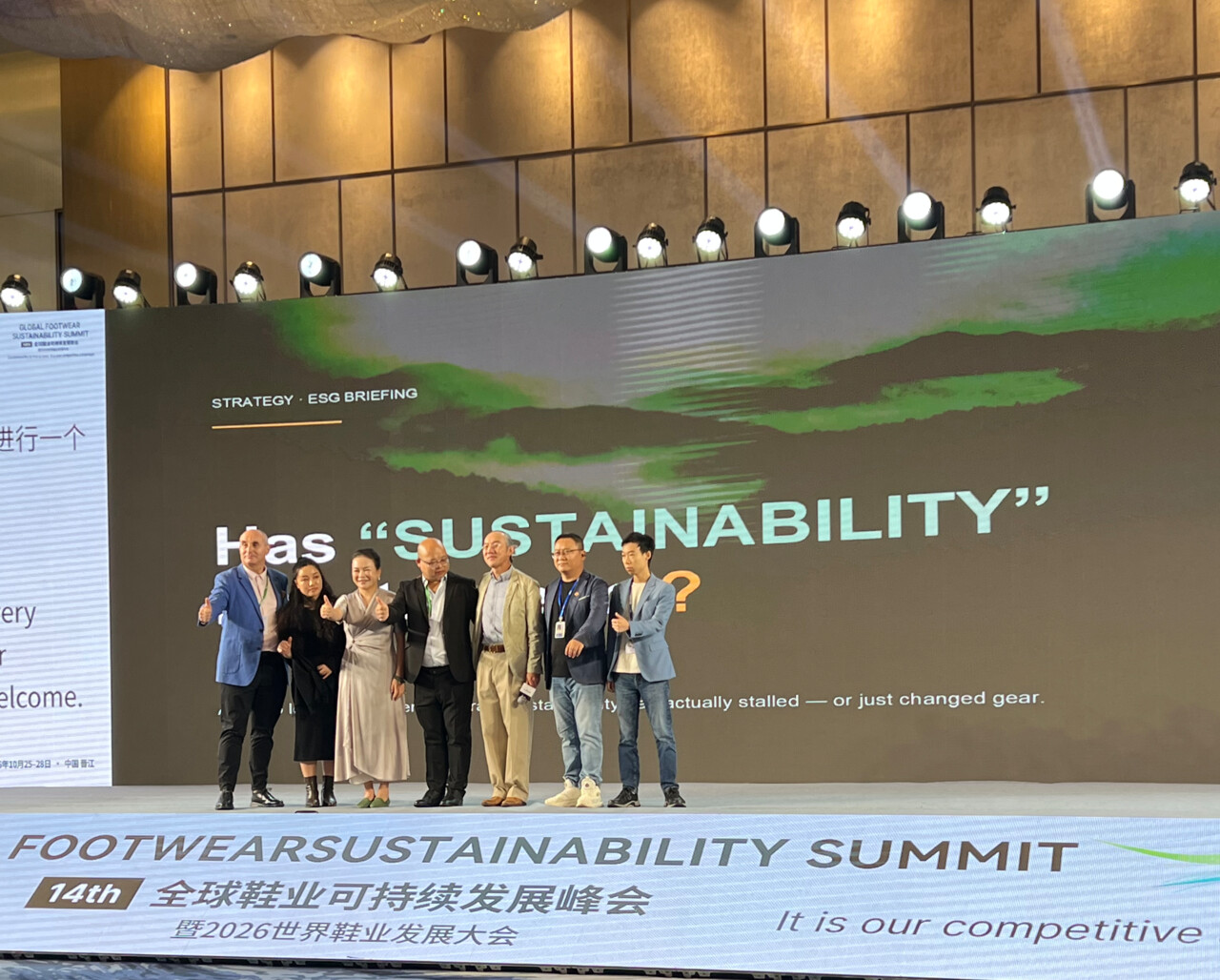
In Jinjiang, during the 14th Global Footwear Sustainability Summit, Changli Group unveiled its 200,000-square-metre logistics complex, due to become operational in 2027, and signed an agreement with SF International to measure the emissions of every footwear consignment.
At the 14th Global Footwear Sustainability Summit, it became clear that sustainability is measured in terms of costs, industrial scale, data and the ability to collaborate. Materials, digital technology and the dialogue between Europe and Asia were among the key themes.