

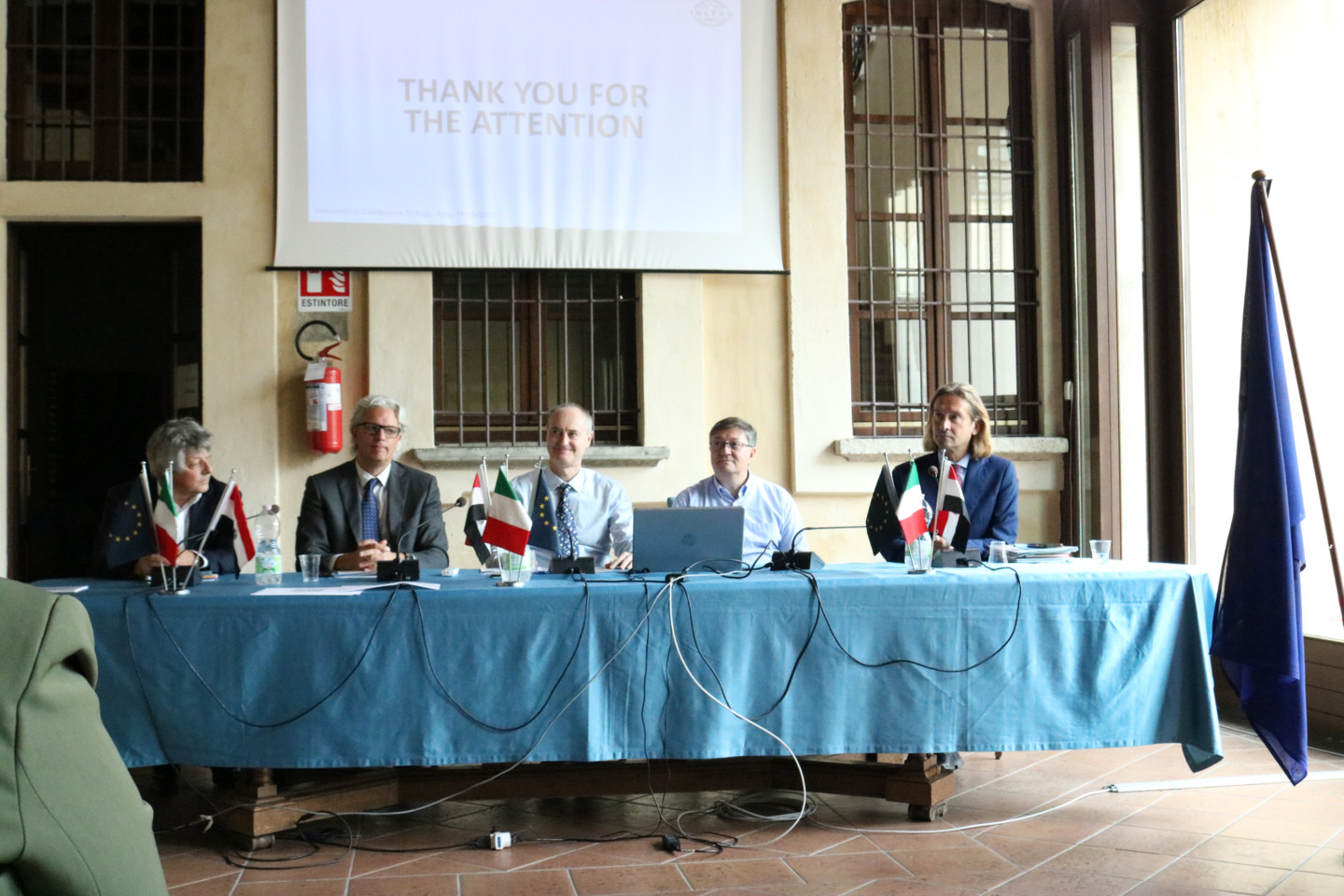
Robbiki Leather City: the Egyptian mission concludes in Turbigo
A Conference and the Signing of a “Memorandum of Understanding” to strengthen collaboration between Italy and Egypt in the leather industry
Keep reading...
June 2026
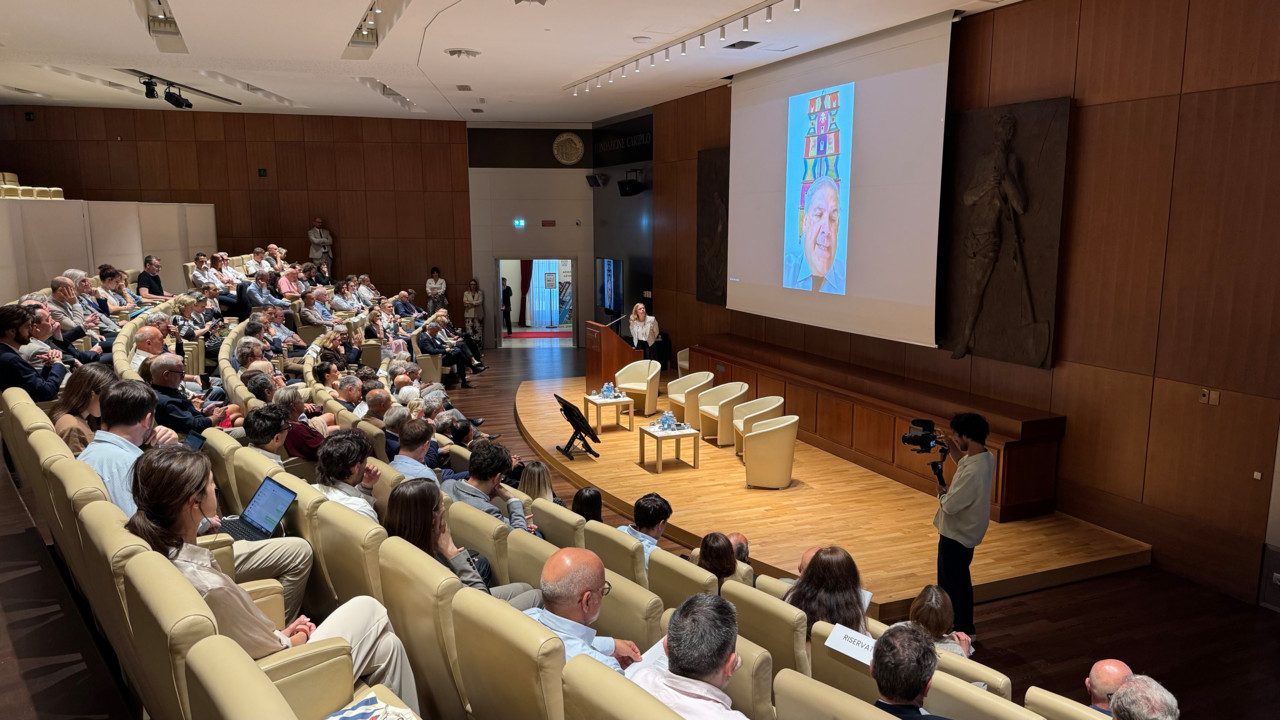
The Assomac Assembly forecasts a 11 per cent decline by 2025 and a global market share falling from 42 per cent to 27 per cent over twenty years. But beneath the declining figures lies a structure that remains solid: the game is being played out along the supply chain.
In the kelp forests of the North Pacific, there is an animal that weighs thirty kilos and sustains an entire ecosystem: the sea otter. As long as it is there, the sea urchins remain in check and the kelp grows in columns as tall as buildings. Remove it, and within a few years the sea urchins devour everything. What remains is a barren seabed, a ‘sea urchin desert’. No one had planned this disaster. All it took was for one link in the chain to disappear.
Bear that barren seabed in mind, because the story told by the Assomac General Assembly, which met on 18 June in Milan, is precisely this: what happens when a link in the chain comes loose.
EIGHT TO ONE
The most striking figure is not a percentage, but a ratio. In Vigevano, the historic heartland of the footwear machinery industry, there are now eight machinery manufacturers for every footwear manufacturer. Eight to one. An ecosystem in which the upstream players in the supply chain have remained, whilst the end-users have left. Viewed in this light, the supply chain bears a strong resemblance to a barren seabed: everything still appears to be in its place, but the balance has already been disrupted.
The sector’s figures confirm this impression. 2025 ended with a decline of 11 per cent, following a 12 per cent drop in 2024, resulting in an estimated output of 512 million euros. The number of companies fell from 225 to 220, the workforce from 3,800 to 3,700, and exports from 385 to 338 million. These figures point to a decidedly negative trend.
THE SHARING THAT IS MELTING AWAY
In 2005, Italy accounted for 42 per cent of global trade in the sector. By 2025, this had fallen to 27 per cent. Fifteen percentage points evaporated in twenty years. Over the same period, China’s share rose to 49 per cent, making it the world’s leading exporter. And here we must remain realistic, because this overtaking is not down to skill alone: Beijing benefits from public support that is up to eight times higher than the OECD average. It is not a level playing field.
But it would be too easy to focus solely on the decline. The downturn is not uniform, and it is precisely in these differences that the future lies. Tannery machinery, which had held up for years, fell by 24.49 per cent: the sharpest decline. Leather goods machinery fell by 9.80 per cent, footwear machinery by 4.08 per cent, whilst spare parts and maintenance remained essentially stable (-0.64 per cent).
The findings of the economic analysis therefore show that the sector has undergone a profound structural transformation over the last thirty years. The number of firms and employees has gradually declined, whilst production and exports have remained at relatively high levels thanks to a process of specialisation, concentration and increased added value.
The sector remains strongly oriented towards international markets, with exports representing a structural and decisive component of turnover. However, recent trends highlight growing volatility in demand and greater exposure to global economic cycles.
At the same time, the Italian user sectors – tanning, footwear and leather goods – have followed different trajectories of development. The tanning and footwear sectors have recorded a significant reduction in production volumes, the number of firms and employment, though this has been accompanied by a gradual shift towards mid-to-high-end and high value-added production. The leather goods sector, on the other hand, has experienced a long period of strong growth, driven by the expansion of the luxury market and international demand from major brands, although it is now showing increasing vulnerability linked to the slowdown in the luxury sector.
The international competitive analysis confirms Italy’s central role in the segments requiring the highest level of technological specialisation, particularly in tanning machinery, leather goods machinery and spare parts. In these sectors, the Italian industry continues to maintain a significant competitive advantage based on quality, know-how, customisation capabilities and integration with production supply chains.
The competitive landscape is, however, markedly different in the footwear machinery sector, where China has consolidated a dominant position thanks to its ability to dominate high-volume production markets and more standardised segments.
The comparison with China is one of the key factors. Analyses show that the two countries exhibit profoundly different industrial models. Italy maintains a strong presence in the more sophisticated markets and premium segments, whilst China focuses its growth on emerging markets and higher-volume production. However, China’s ongoing technological advancement and growing capacity for international penetration make it increasingly necessary for Italian companies to strengthen the distinctive features of their offering and accelerate innovation processes.
The evolution of the sector’s industrial and technological models is also particularly significant. Machinery is no longer merely a physical asset, but is increasingly becoming an integrated, connected and service-oriented technological platform. Digitalisation, automation, software, artificial intelligence, predictive maintenance, remote technical support and data management are playing an ever-greater role in building competitive advantage.
Furthermore, a number of major strategic challenges that the sector will be called upon to address in the coming years are highlighted. Among these, the following are of particular importance:
• the expansion of companies’ scale and capital base;
• generational succession and the evolution of governance models;
• the need for increasing investment in technological innovation;
• the development of more structured international sales and support networks;
•
• the ability to establish a presence in new emerging markets, particularly Africa,
India and South-East Asia;
• the evolution of international trade fairs into permanent platforms for rela-
tions and industrial integration.
Analysis of the financial statements confirms that, whilst the sector is experiencing increasing competitive pressure and declining profitability, it maintains, on the whole, a sound capital and financial structure.
Companies generally demonstrate high levels of capitalisation, good financial autonomy, adequate liquidity and a gradual reduction in financial leverage. This solidity is now one of the sector’s main strengths and provides the necessary foundation to support investment, transformation processes and international growth strategies.
However, certain critical issues remain. In fact, recent years have seen a gradual squeeze on operating margins, greater volatility in profitability, a slowdown in productivity and a deterioration in working capital management, particularly in the footwear and leather goods machinery sector, which appears to be more exposed to fluctuations in international demand.
The tannery machinery sector, on the other hand, shows greater resilience and a better ability to absorb economic shocks, thanks to a more balanced operational structure and less volatility in financial results.
Overall, the picture is of a sector that still retains significant strengths – technological expertise, industrial heritage, international reputation and financial soundness – but which now finds itself at a decisive stage in its evolution.
The challenge in the coming years will not only concern the ability to defend existing market shares, but above all the opportunity to redefine the sector’s competitive model within a profoundly changed global context. Innovation, technological integration, advanced internationalisation, collaboration between companies, scaling up and the enhancement of skills will be increasingly decisive factors.
Finally, the evidence suggests that maintaining Italy’s leadership will require an increasing ability to develop shared strategies and long-term industrial visions. Only through investment, the pooling of expertise and the strengthening of its international presence will the sector be able to continue to serve as a global benchmark for technologies dedicated to the tanning, footwear and leather goods supply chains.
A Conference and the Signing of a “Memorandum of Understanding” to strengthen collaboration between Italy and Egypt in the leather industry
Keep reading...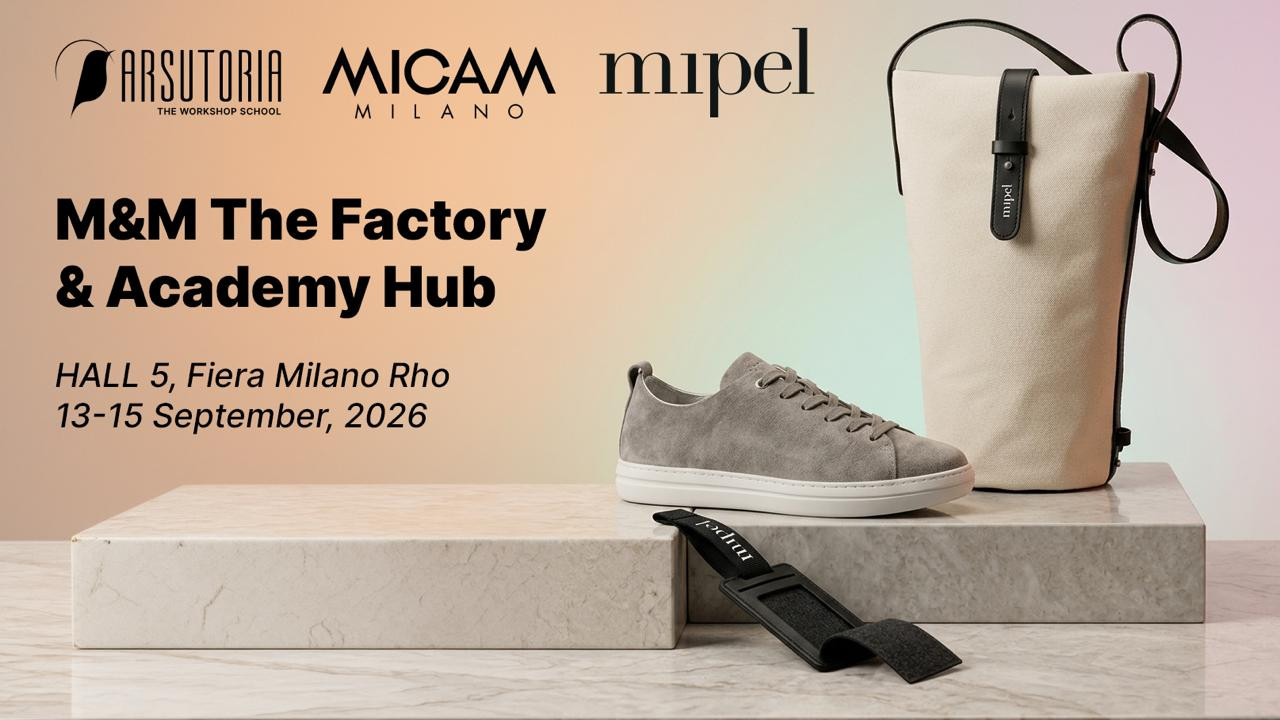
From 13 to 15 September 2026, in Hall 5 at Fiera Milano Rho, the M&M – The Factory & Academy Hub builds a luggage tag, a sneaker and a bag live. Almost 30 material and technology companies involved, and an educational programme developed by Arsutoria.
Keep reading...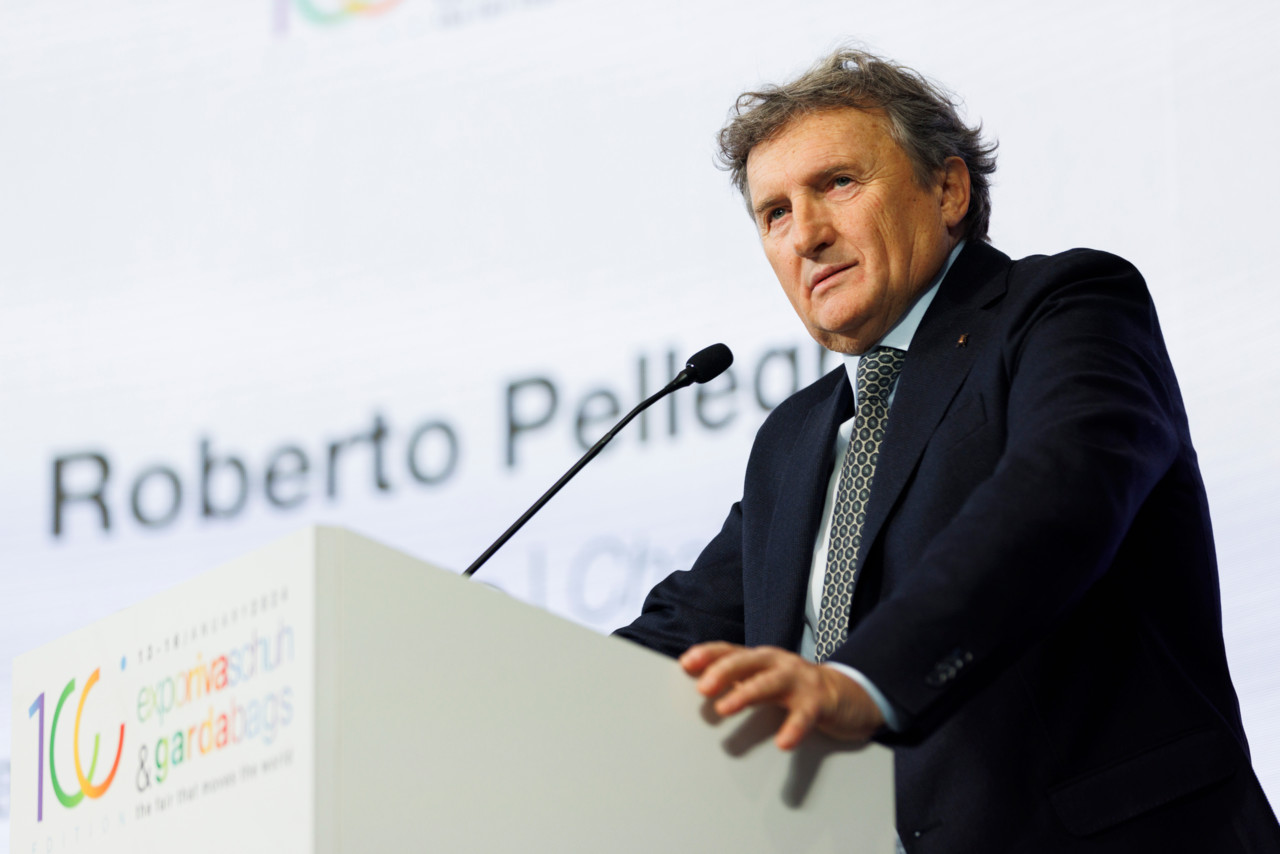
At the helm of Riva del Garda Fierecongressi since 2007, he propelled the fairs beyond national borders. A tribute to a leader who foresaw the future by looking back.
Keep reading...You must login to read this free content
This content requires a subscription to view. Are you already a subscriber? Sign in