Carité leads the digital revolution in Portuguese footwear
The company coordinates the FAIST Agenda, a programme that is transforming the Portuguese footwear industry through intelligent automation, sustainable materials and integrated digitalisation.
Company news Arsutoria
December 2025
Coordinating a consortium does not simply mean chairing meetings: it means charting the course. And that is exactly what Carité – Calçados, a Portuguese company specialising in private label production for major international brands, is doing by taking the lead in the FAIST Agenda.
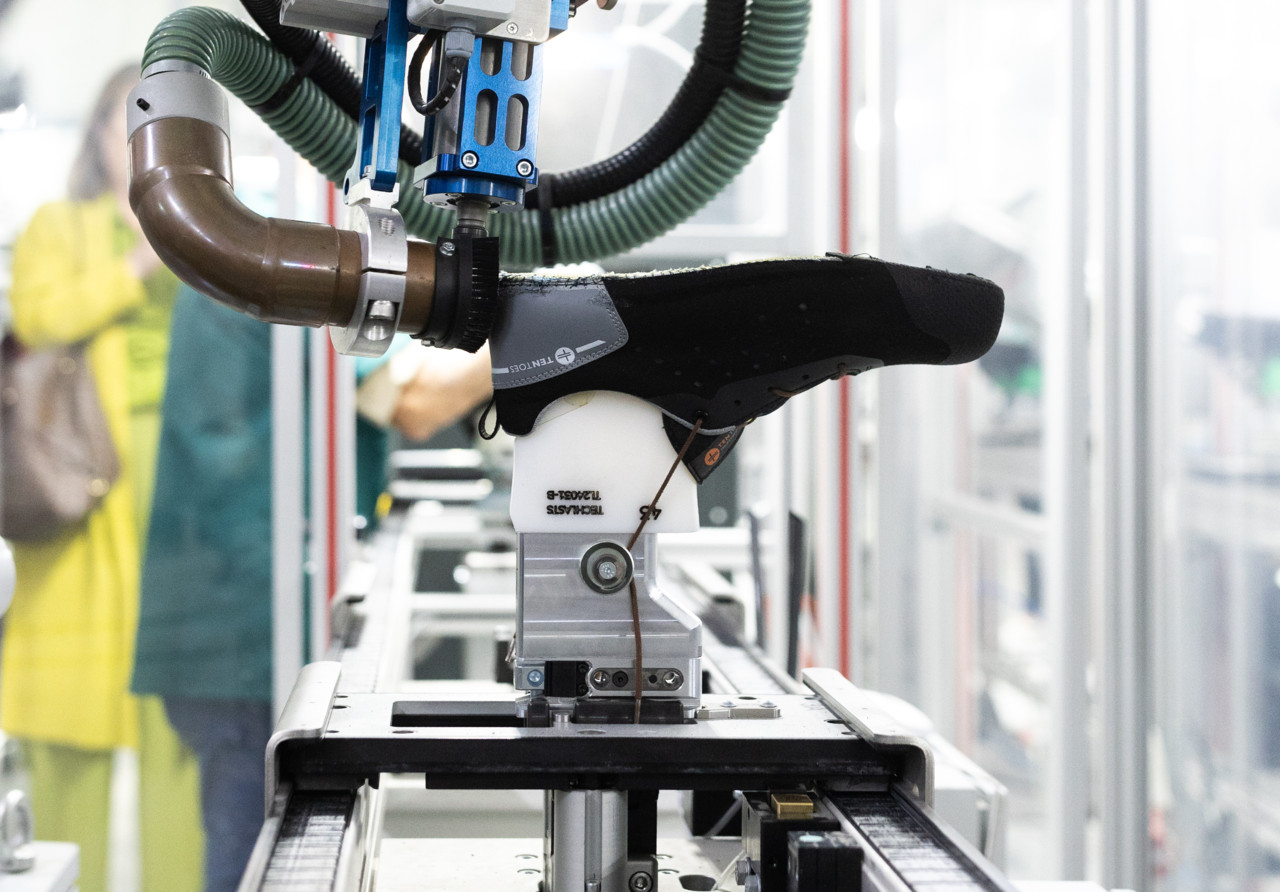
The programme is structured around three key areas. The first concerns intelligent automation: Carité is developing an integrated and flexible production line, equipped with a conveyor synchronised with injection machines, pallets with RFID traceability and a thermal tunnel for stabilisation. This is complemented by the High Frequency Fusion Cell, a technology that fuses multi-layer fabrics and TPU films directly into the uppers, drastically reducing manual operations.
On the sustainability front, the company is collaborating on the development of multifunctional bioplastic coatings for insoles and uppers, capable of offering UV protection, moisture control and antifungal properties. At the same time, work is underway on eco-friendly packaging derived from tanning waste and 3D-printed shoe moulds that are recyclable and adaptable to different stages of production.
Finally, digitalisation: from the Visualgest system for AI-based planning, to the eCODICEC cloud platform designed to ensure data confidentiality in a highly competitive market, to the artificial vision systems mounted on cutting machines.
Industrie Chimiche Forestali S.p.A. has ended the year with impressive results despite challenging circumstances, confirming its leadership in the high-tech adhesives and textiles sector.
The Trissino-based group presents a production process that drastically reduces water consumption and a new S/S 2027 collection that celebrates the authenticity of the material.