Footwear: global production remains at 2024 levels but export value rises
Flash news
October 2026
In 2025, global production remains at 24.6 billion pairs (+0.1 per cent), whilst the value of exports rises by 1.6 per cent to 172 billion dollars. Asia produces 88.7 per cent of shoes, whilst China’s share of exports falls to 61.2 per cent.
Zero point one. That is the margin separating 2025 from the previous year in global footwear production: 24.6 billion pairs, a step forward so small as to resemble stagnation. This snapshot comes from the World Footwear Yearbook 2026, the sixteenth edition of the yearbook published by the Portuguese Footwear Association (APICCAPS), launched in 2011. The figure follows a revised estimate for 2024, which now indicates growth of close to 10 per cent for that year.
Stagnant, however, does not mean unchanged. Export volumes fell by 0.1 per cent, whilst the value of trade rose by 1.6 per cent to reach 172 billion dollars. Fewer pairs exported, more dollars earned. Driving the value is the recovery in the average export price, which has risen to $11.65 per pair following the decline in 2024: it stood at $8.87 in 2016 and remains below the record high of $11.96 set in 2023. There is a marked difference between regions: $34.76 per pair in Europe, compared with $8.02 in Asia, reflecting very different market structures, production profiles and market positioning.
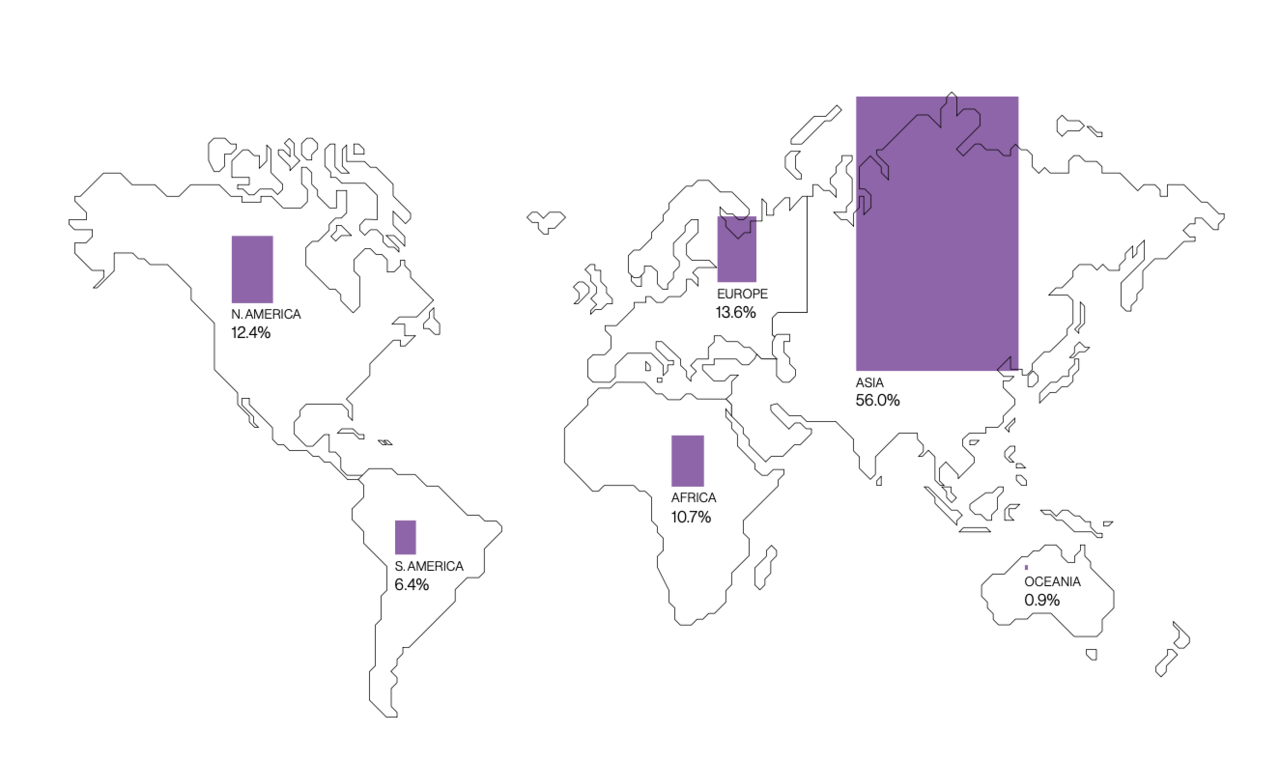
Asia remains the centre of gravity, whichever way you look at it: it produces 88.7 per cent of the world’s footwear and consumes 56 per cent of it. China produces 13.7 billion pairs, accounting for 55.6 per cent of the total, followed by India with 3 billion (12.2 per cent) and Vietnam with 1.7 billion (6.7 per cent). Outside Asia, only Brazil (3.4 per cent) and Mexico (0.9 per cent) feature among the top ten producers.
2025 World Footwear Consumption
Anyone who imagines China’s dominance to be unchanging needs to think again. China exports 9 billion pairs, but its share of global exports has fallen to 61.2 per cent, down from 69.1 per cent ten years ago. Vietnam has benefited most of all, rising to 11.2 per cent. In Europe, Germany, Belgium and the Netherlands act as logistics and re-export hubs, and Germany ranks fourth in the world in terms of export volumes.
In terms of consumption, the disparities between regions are stark. In North America, an average of 4.6 pairs per person are purchased, compared with 4.1 in Europe and 1.6 in Africa. China is the leading market with 4.8 billion pairs, ahead of India (2.8 billion) and the United States (1.95 billion).
The outlook for 2025, therefore, points to a market that is growing not in volume but in value, with its centre of gravity increasingly defined by Asian consumers.
In the first half of 2026, turnover fell by 2.5 per cent and production by 4.6 per cent. Europe holds steady, whilst the Middle East slumps. 1,884 jobs were lost in six months – more than in the whole of 2025.
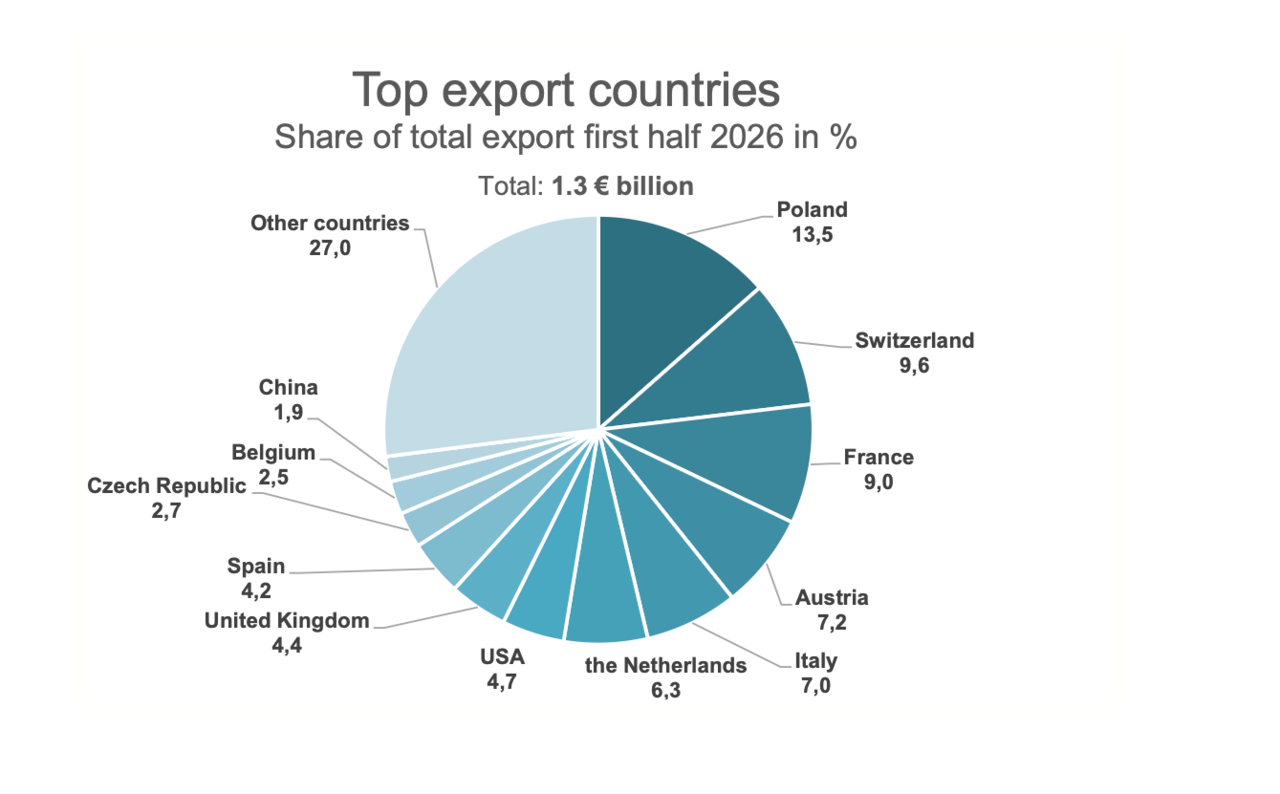
In the first half of 2026, the German footwear and leather goods industry remained stable, albeit at low levels. Amid price rises linked to the war with Iran and new European waste regulations, Italy saw a decline in volumes but maintained its value.