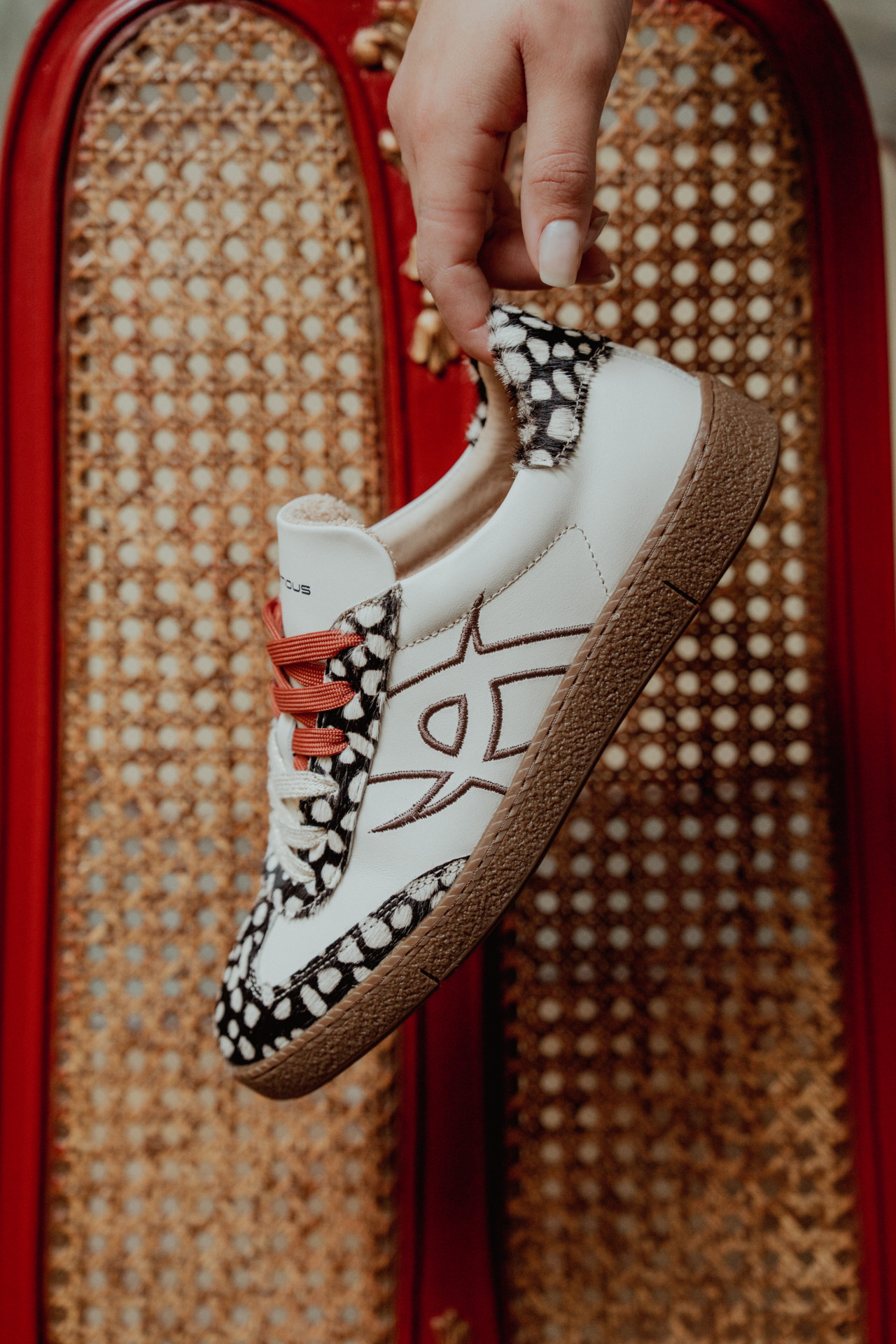
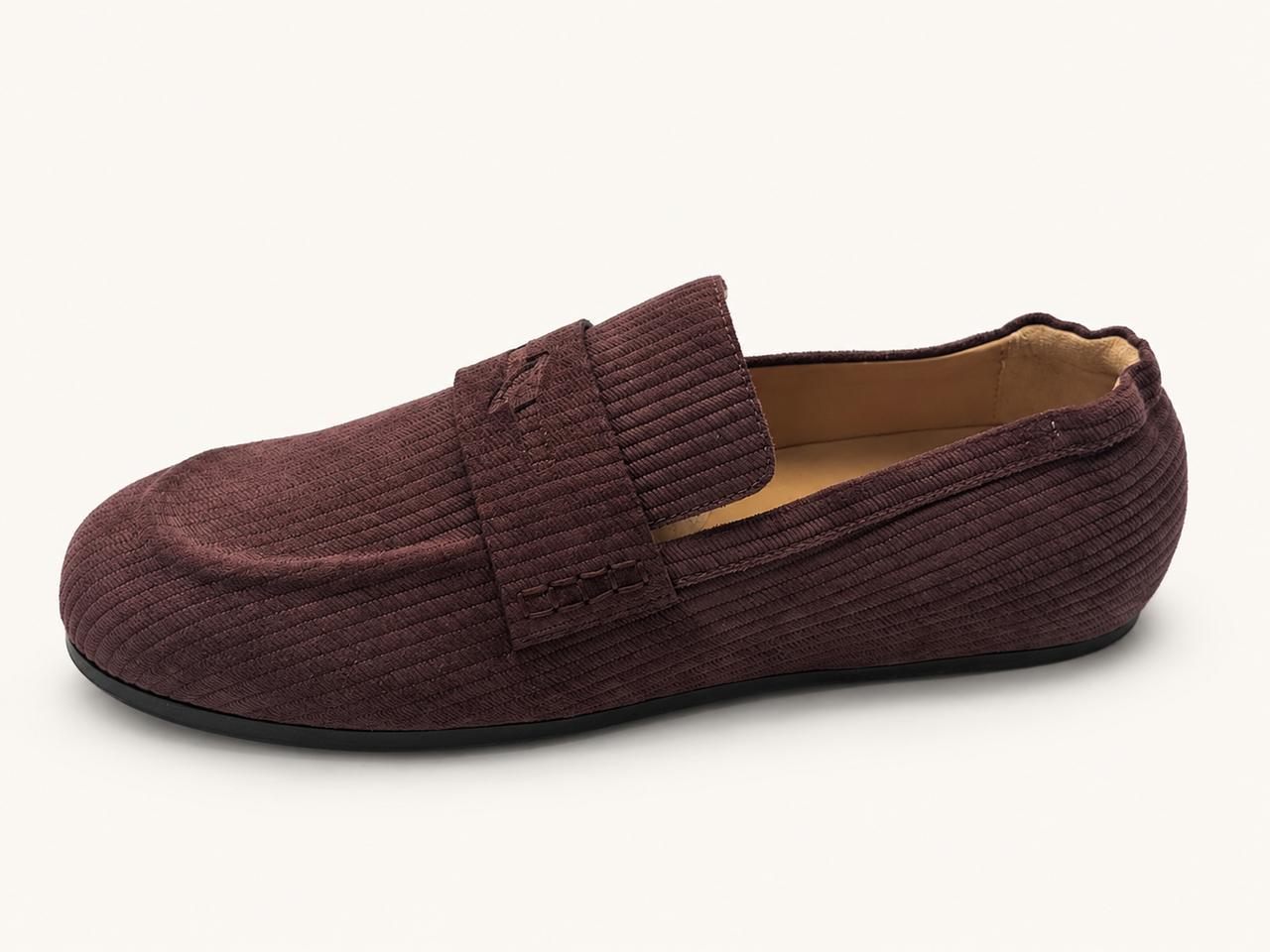
The past never fades away completely. It lurks in the details, in the stitching, in the shape of a shoe.
Company news Arsutoria
March 2026
Ambitious, a Portuguese brand founded in Guimarães in 2008, knows this well. At MICAM Milan, it presented Portraits, the Autumn/Winter 2026-27 collection capable of transforming nostalgia and identity into concrete, elegant, durable footwear. The collection draws inspiration from returning to places which, whilst appearing empty, hold stories within them. Deep browns, mustard yellow, intense blues and khaki make up a palette that balances roots and renewal, stability and rebirth. Each model is born from artisanal expertise passed down through generations: precise stitching, meticulous finishes, and constructions designed to stand the test of time.
Portraits debuts at a time when the figures speak for the brand: 500,000 pairs produced annually, 200 employees, 58 markets, distribution across 900 retail outlets. Italy remains the key market, with €6 million in 2025 — 30% of total turnover, followed by the United States and the Netherlands. Whilst Germany shows some uncertainty, the Italian consumer continues to prioritise style. Fertile ground, therefore, for a brand that sees luxury as something felt with every step.
Ambitious presents the Portraits collection, available in both men’s and women’s lines, confirming a brand vision that embraces both worlds without compromise.
The Jinjiang-based Chinese group, which has been an ODM for GEOX, Skechers and Jack Wolfskin for thirty years, is opening its first customs logistics park in Quanzhou. Two hundred thousand square metres, AI-powered sorting, eighteen European warehouses: the Chinese footwear industry is reinventing itself.
The brand, founded between Italy and Dubai, ventures beyond the world of trainers for the first time with ‘Linea’, the first loafer in a collection that redefines the concept of imperfection.
The ZDHC framework covers textiles, leather and plastics, but not metal: for years, the accessories supply chain has been responding to written requests intended for other processes. Led by the Physis Consortium, the first list of restricted substances for electroplating was drawn up at the end of 2025.