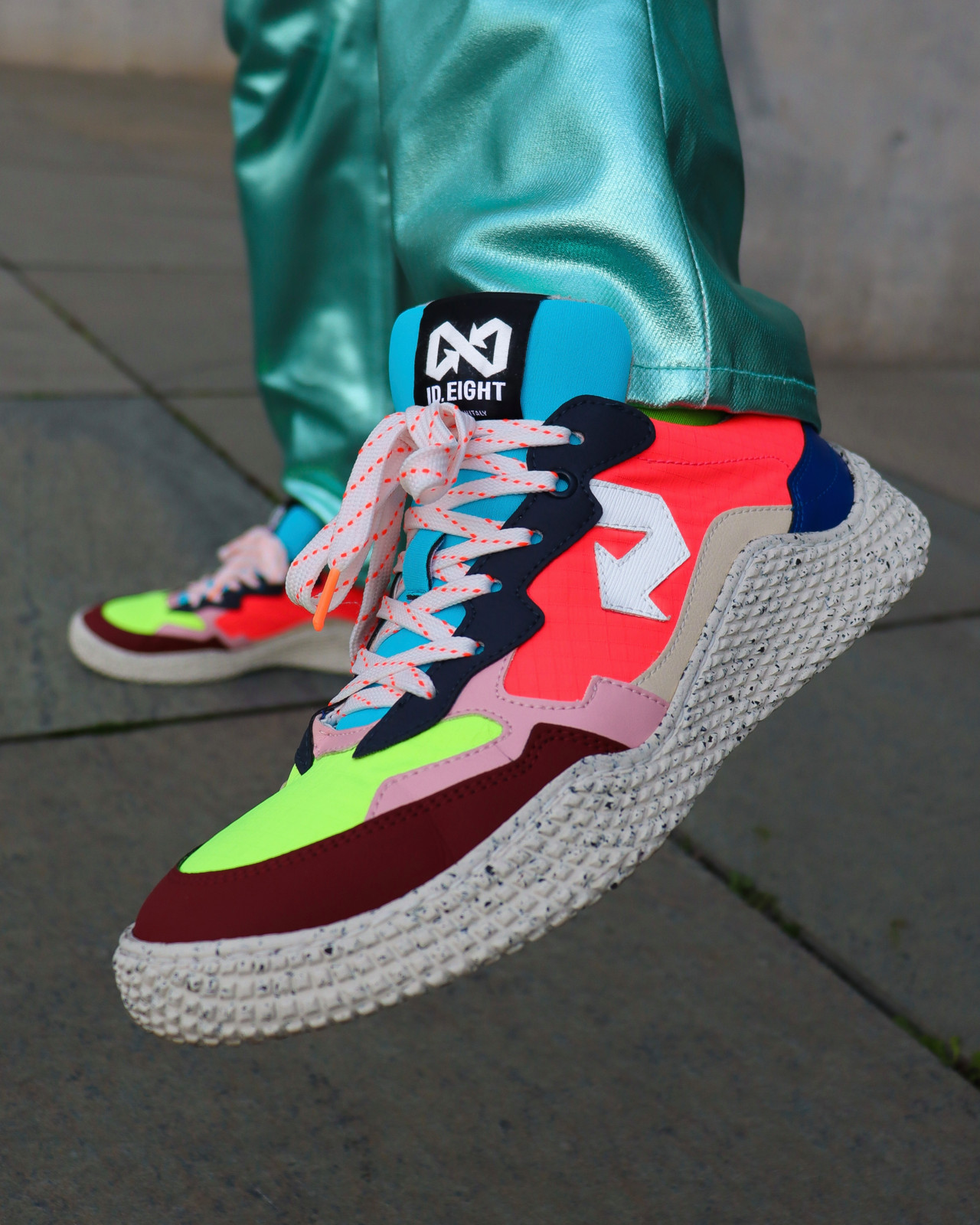
While over 1.5 tonnes of food are wasted worldwide every year, the Tuscan brand makes trainers from food industry waste.
Company news Arsutoria
October 2025
Founded in Florence in 2019, ID.EIGHT offers timeless, seasonless sneakers made from over 70% recycled materials, 100% cruelty-free and genderless. The upper is made from Italian-made materials derived from food industry by-products: BioVeg, made from industrial corn waste and mycelium; Vegea, made from discarded grape stalks, skins and seeds; Uppeal, a leather-like fabric made from apple skins and cores. The sole of the ID.EIGHT is made from natural and recycled rubber, as are all the materials used for the laces and label. The lining is made from 100% certified, breathable organic cotton. All of the brand’s suppliers are European, carefully selected and certified according to international environmental standards, such as ISO and GRS (Global Recycled Standard) certifications. ID.EIGHT has also obtained the highest score of VVV+ in the Animal Free Fashion rating promoted by the Anti-Vivisection League.
A|impact, the venture capital fund promoted by Avanzi, has also chosen to invest €350,000 in the sustainable sneaker brand, contributing to the internationalisation process and expansion of the Florentine brand’s product range. ‘We are particularly proud of this partnership, as it brings a partner into our company who shares our values and our code of ethics,’ were the comments of the two founders of ID.EIGHT, South Korean designer Dong Seon Lee and Italian Product Manager Giuliana Borzillo.
The Jinjiang-based Chinese group, which has been an ODM for GEOX, Skechers and Jack Wolfskin for thirty years, is opening its first customs logistics park in Quanzhou. Two hundred thousand square metres, AI-powered sorting, eighteen European warehouses: the Chinese footwear industry is reinventing itself.
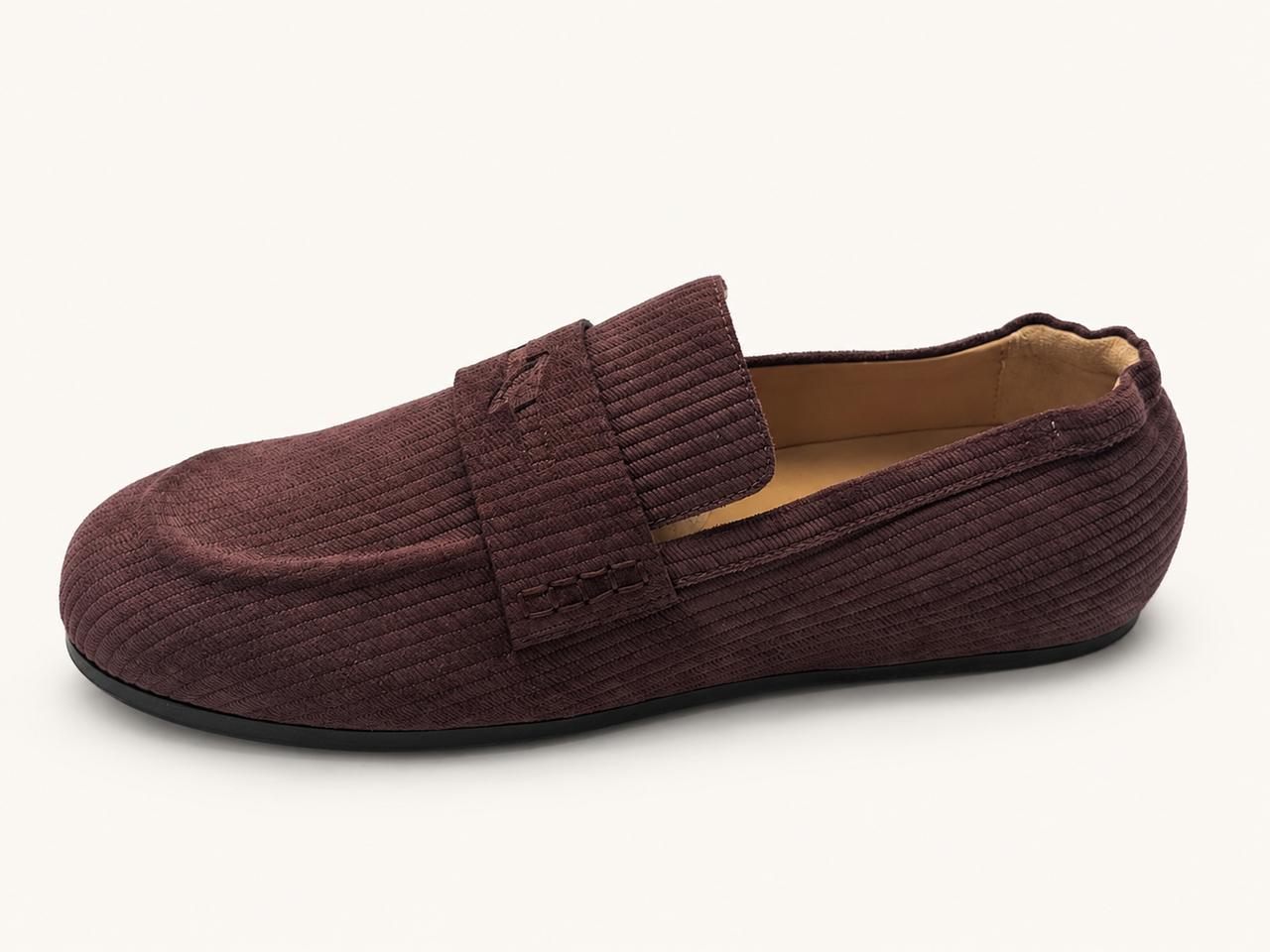
The brand, founded between Italy and Dubai, ventures beyond the world of trainers for the first time with ‘Linea’, the first loafer in a collection that redefines the concept of imperfection.
The ZDHC framework covers textiles, leather and plastics, but not metal: for years, the accessories supply chain has been responding to written requests intended for other processes. Led by the Physis Consortium, the first list of restricted substances for electroplating was drawn up at the end of 2025.